Introduction — The Problem Behind the Glow
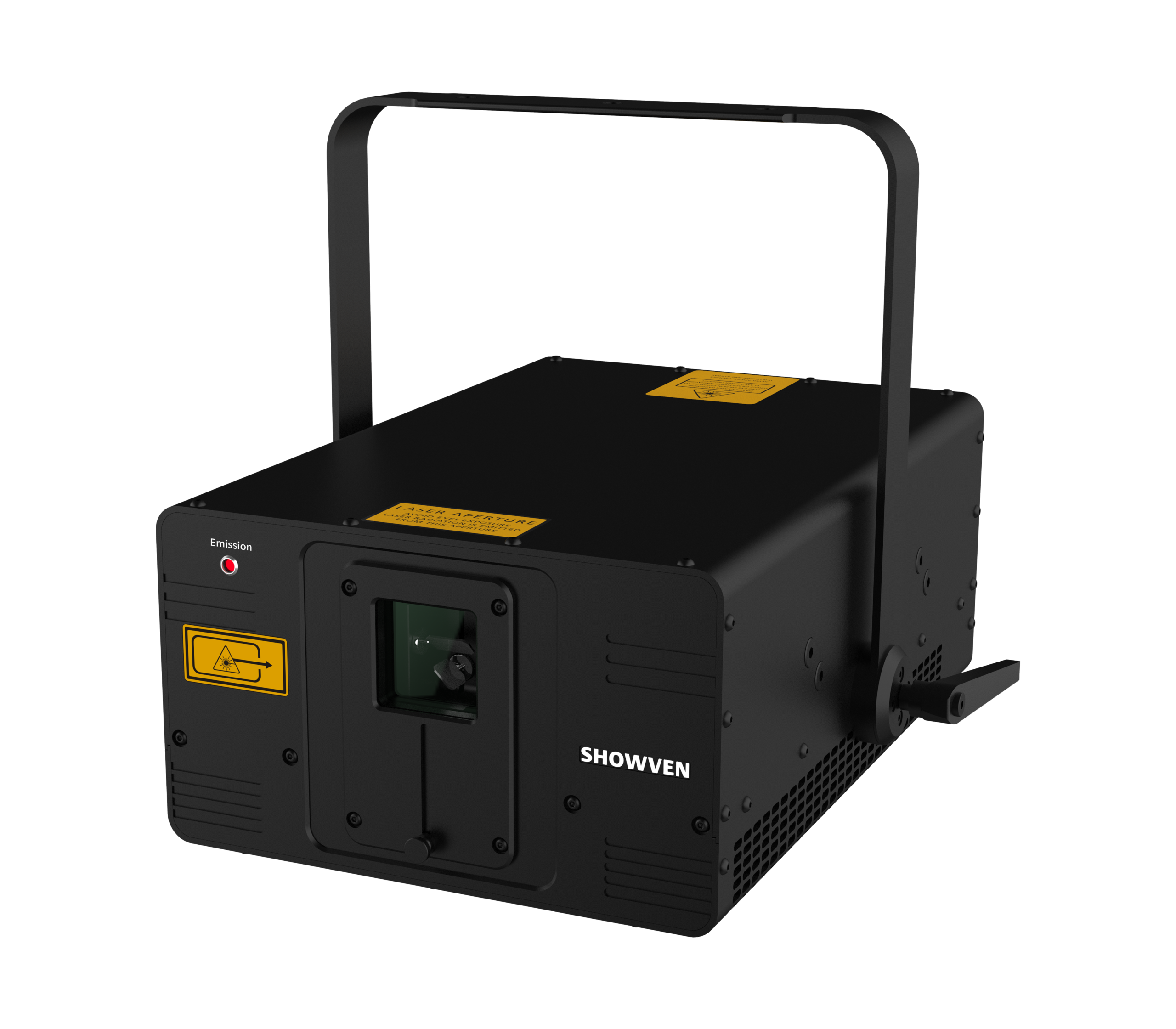
A laser show is a control puzzle with beams for pieces. Stage Laser Lights make that puzzle visible to every seat in the house. In practice, you’re juggling path planning, safety zones, and power budgets, all while keeping latency down. Choose laser stage lighting without mapping the control chain, and you invite drift or flicker. Picture a mid-size festival: a 40-minute changeover, 30 meters of truss, and sightlines that cannot be blocked (front-of-house won’t forgive you). Data point: most small tours run mixed protocols—DMX for cues, ILDA for frames—which adds conversion steps. So why do beams stutter, bloom, or miss their marks when the music drops?
Traditional rigs hide two big friction points. First, signal flow: DMX hops, splitters, and power converters add jitter before frames even hit the galvo scanners. Second, optics: poor alignment grows beam divergence, so output looks bright up close but soft at the back. Add manual zoning, and safety interlocks get bypassed under pressure—funny how that works, right? The result is a show that feels “nearly right” but never lands. Look, it’s simpler than you think: the bottleneck is rarely the diode wattage; it’s the chain from control to mirror. When that chain wobbles, even perfect content and a tight timecode won’t save you.
Where do things usually break?
Three spots: conversion nodes that mishandle frame rates, undercooled heads that throttle mid-set, and scanning limits that overshoot safe angles. Fix those, and your beams stop arguing with your soundtrack.
Next-Gen Playbook — Comparative Gains You Can See
Modern systems clean this up by changing the principle of control. Instead of one console pushing everything, fixtures act like edge computing nodes. They cache frames, validate zones locally, and sync to timecode with sub-frame accuracy. Compared to legacy ILDA cabling, networked protocols like Art-Net or sACN cut conversion hops; scan-fail safety and photodiode feedback hold the beam where it belongs. Pair that with smarter galvo drivers, auto-tuning, and better thermal paths, and you keep peak power without blooming. When you spec units rated for realistic IP protection and continuous-duty loads, “rain plus haze” becomes a non-event—your crew will thank you. And if you’re moving from club rigs to arena-scale, the difference is visible in minutes, not days.
What’s Next
Expect tighter content-to-laser pipelines and self-calibrating heads that align after rigging. Frame interpolation on-board, dynamic power limiting per zone, and safer shutters will turn setup stress into repeatable workflows. For tours that mix video and beams, synced nodes make LED walls and concert lasers track the same clock, so transitions feel glued. The upshot: fewer cables, fewer conversion boxes, and fewer surprises. We covered the pain points earlier; now you benchmark differently. Advisory close-out: judge solutions on three metrics—scan accuracy under motion (degrees RMS over time), thermal headroom at your duty cycle (how many degrees before throttling), and end-to-end latency under show conditions (timecode to mirror, in milliseconds). Hit those numbers, and your rig stops guessing.
Bottom line: the smartest upgrade isn’t more watts; it’s fewer weak links. Get the control path right, protect your optics, and let the hardware prove itself under load. That’s how great shows feel effortless—even when they aren’t. Showven Laser