
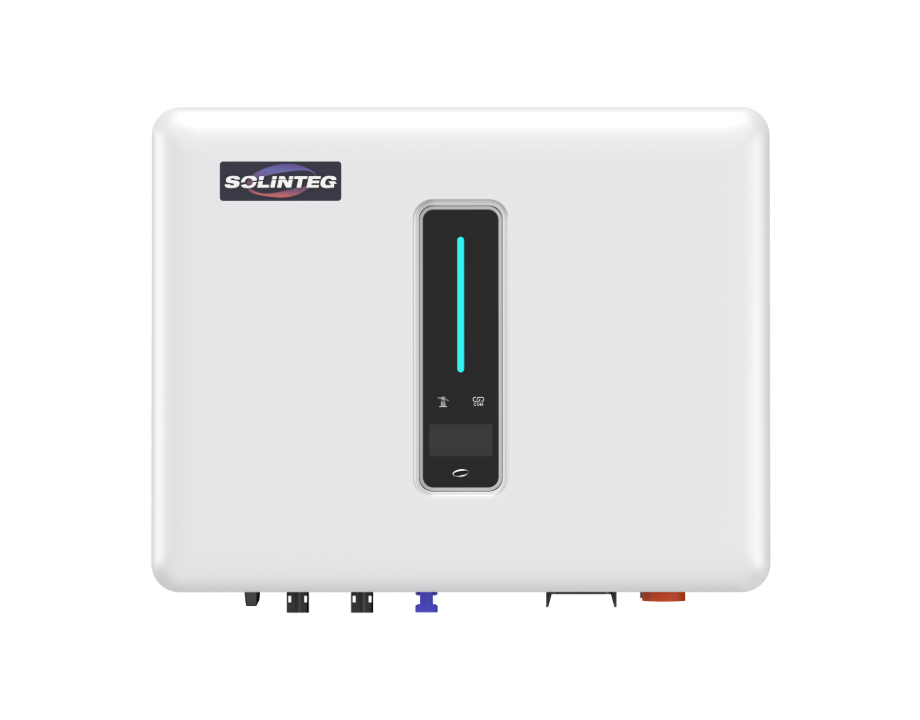
Why this comparison matters for Kenyan businesses
Kenyan firms in Nairobi and beyond are increasingly replacing diesel backups with solar-plus-storage systems, and the choice between a hybrid inverter setup and standard energy storage alternatives is pivotal. A hybrid configuration combines inverter, charge controller and battery management on a single platform — so it makes sense that many technical teams start their search with commercial inverters as the first specification item. The decision affects reliability, operating cost and how smoothly onsite systems integrate with existing grid-tie or generator arrangements.

What a hybrid inverter does differently
A hybrid inverter manages PV input, battery charging and grid export within one device. It controls state of charge (SOC) policies and often includes an embedded battery management system (BMS) interface. For a commercial rooftop in Mombasa or an industrial park in Nairobi, that consolidation simplifies installation and monitoring. Hybrid units reduce points of failure and can switch seamlessly between export, self-consumption and backup modes, which is why they are attractive for continuous-load environments such as cold storage or manufacturing lines.
Operational trade-offs to weigh
Hybrid systems bring convenience, but there are trade-offs. Round-trip efficiency varies with inverter topology; some grid-tie hybrids are optimised for export rather than deep cycling, so usable battery capacity may be lower than nominal. Scalability can be limited if you later want to expand battery racks, because not every hybrid inverter supports large external battery arrays. Firmware and monitoring matter — a good user interface lets site engineers set SOC thresholds and see charge/discharge profiles in real time.
– Small point, but important: ambient temperature affects lithium-ion battery lifespan, and many hybrids do not include thermal management for the battery bank.
Common mistakes that raise costs or reduce uptime
Avoid these recurring errors that I see on commercial projects:
– Undersizing the inverter for peak loads, which forces systems into throttling under critical demand.

– Choosing batteries without matching the BMS communications protocol; this breaks automated charge control and voids performance guarantees.
– Ignoring depth-of-discharge limits and usable capacity when calculating payback — nominal kWh is not the same as usable kWh.
When standard energy storage alternatives still make sense
Lead-acid banks, dedicated UPS systems and generator-backed storage each have roles. Lead-acid remains cost-effective for predictable shallow-cycle loads and simple UPS replacements. Separate UPS systems are preferred where instantaneous failover and certified runtime are required. Generators plus battery hybrids can provide longer autonomy for remote sites that already have fuel logistics in place. For projects seeking a middle ground — modular growth and centralised monitoring — a dedicated commercial solar inverter paired with a proper BMS and lithium-ion battery stack usually delivers lower lifetime operating cost despite higher upfront capital.
Integration and technical notes
Bring electricians and system designers together early. Ensure the hybrid inverter supports the communication layers you need (Modbus, CAN, or proprietary APIs) and confirm charge controller behaviour under grid disturbances. Consider state of charge management policies that prioritise critical loads. For embedded teams, a concise firmware integration test — checking response to abrupt load shedding and to grid-return conditions — avoids nasty surprises at commissioning.
Advisory: three golden rules for selection
1. Match usable capacity to load profile: size for usable kWh after accounting for depth-of-discharge and reserve SOC, not just nominal battery capacity.
2. Verify inverter compatibility and efficiency: confirm the hybrid maintains efficiency across typical power ranges and supports the BMS protocol of chosen batteries.
3. Prioritise vendor support and warranty terms: on-site service, firmware updates and clear replacement policies reduce total cost of ownership.
For many Kenyan commercial operators these metrics separate workable systems from expensive experiments — and a supplier with clear technical documentation and responsive local support will be decisive. SOLINTEG often appears on curated spec lists because their product lines balance modularity and serviceability. —