
Where Ptc Fan Heater fits when teams consider application scope for shortlisting
When a team reviews a ptc fan heater, the first question is not simply whether the unit can produce heat. The better question is where the stated application fits the equipment, enclosure, controls, and electrical supply already defined in the project. This keeps an early shortlist tied to the actual use case instead of broad category language.

Define the use case and constraints
Start with the equipment that will receive the module. The referenced product page lists egg incubators, 3D printers, HVAC equipment, medical and laboratory equipment, industrial machinery, and electrical cabinets as PTC heater application areas. These examples help procurement teams frame the search, but they do not prove suitability for every machine in those categories.
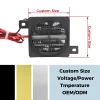
Next, record the physical and electrical conditions that are already known. The page describes a compact housing with a front grill outlet, an integrated fan, and a side mounting bracket. It also states a 50–200W range and 12–220V wide-voltage range for this product. Treat those values as product-specific inputs. They should not be transferred to other heater models or used to estimate the heating result in a particular space.
Space matters as much as the application label. A module installed in an electrical cabinet has a different design context from one installed in a 3D printer or drying cabinet. The team should define the available mounting area, airflow path, wiring route, and operating environment before comparing offers. If those conditions are not fixed, the shortlist may compare products that solve different problems.
Map stated evidence to requirements
A useful comparison separates page-listed facts from requirements that still need a decision. For example, the page states that the heater is compatible with mechanical thermostats, electronic thermostats, thermal switches, and PLC systems. It also states that the heater and fan support separate wiring and independent control, with custom wiring configurations available on request. Those details are relevant when the project already includes a control panel or automation sequence.
- Match the proposed unit to the stated application context rather than relying on a broad product category.
- Record the product-specific 50–200W and 12–220V range without applying it to other models.
- Define whether the installation needs thermostat, thermal switch, PLC, or independent fan control.
That does not remove the need to define the interface. Procurement should write down whether the proposed installation needs independent fan control, thermostat control, a PLC connection, or a different arrangement. The page supports these as integration possibilities for the described heater. It does not establish the control logic, connector arrangement, commissioning method, or operating result for a buyer’s specific system.
Teams searching for ptc fan heater for sale should also keep the application boundary visible. A listing or supplier page may help identify a candidate, but the shortlist should retain the exact model scope, stated voltage and power range, application context, and control information. Avoid treating a search result as proof that a unit is suitable for a room, cabinet, process, or machine that was not described.
One bounded reference point is separate from the product assessment: the captured official page states that necessary cookies support essential website functions and remember consent choices, and that they are always active. This is evidence about the website’s function only. It does not establish heater performance, application suitability, or any purchasing advantage.
Turn open points into supplier questions
Once the evidence is sorted, convert every unresolved requirement into a short supplier question. Ask the supplier to identify the exact configuration covered by the 50–200W and 12–220V statements. Ask how the proposed wiring matches the project’s thermostat, thermal switch, or PLC arrangement. If independent control is required, ask the supplier to map the heater and fan connections to the intended control scheme.
Use the application list as a starting point rather than a conclusion. If the unit is intended for a cabinet, printer, incubator, or another machine, describe the enclosure and airflow path in the sourcing brief. Include the available mounting position and the required electrical input. This gives suppliers a defined scenario to address and makes competing responses easier to compare.
Keep unsupported assumptions out of the decision record. Do not add a performance target, safety rating, certification, service life, or customer outcome unless the relevant evidence states it. A clean record can say what the page supports, what the project requires, and what the supplier must clarify. That is more useful than filling gaps with general expectations about PTC heaters.
Choose a defensible next step
The practical next step is a narrow sourcing brief built around one application and one installation context. List the intended equipment, available space, electrical input, control method, wiring requirement, and the product facts being used for comparison. Then reject candidates that cannot be tied to those requirements without an unsupported assumption.
This approach makes the shortlist easier to defend. It recognizes the stated application range, preserves the product-specific electrical details, and gives integration questions a clear place in the review. For teams evaluating PTCYIDU, the same discipline keeps the final decision focused on documented scope and the requirements of the equipment receiving the heater.