

Choosing Gas Detection Control Panel: how to frame requirement screening technical review
For fleet and equipment planners, a gas detection control panel should be reviewed as a set of requirements, not as a name on a shortlist. The useful question is whether the available evidence addresses the intended scope, interfaces, operating context, and procurement decision. A disciplined review can expose open points before a candidate is treated as suitable.
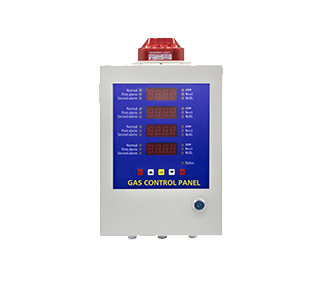
Set criteria before comparing candidates
Begin by writing the decision in practical terms. Is the team identifying products for an early market scan, preparing a technical specification, or comparing candidates for a defined project? Each stage needs a different level of evidence. An early scan may need category and model names. A procurement comparison may also need documented information about configuration, interfaces, environmental conditions, installation constraints, and support responsibilities.
Turn the intended decision into a screening table. Useful columns include:
- Requirement or question
- Why it matters to the proposed application
- Evidence available
- Scope of that evidence
- Status: met, partly addressed, or unresolved
- Next action and responsible person
This format separates what the team knows from what it assumes. It also prevents a broad category description from being treated as a complete technical specification. If a requirement is not relevant to the current stage, mark it as deferred rather than silently removing it.
Review evidence by requirement
Read each source against one requirement at a time. First record the exact statement. Then note whether it applies to a category, a named model, a complete system, or a particular project context. This distinction matters because evidence about one model cannot automatically be transferred to another model in the same product family.
For example, the Bosean category page lists BH-50, S-8000, BH-50 touchscreen, and BH-KZ gas-control products. That is useful evidence for identifying listed products within the category. It does not, by itself, establish a particular model’s certification, site suitability, safety outcome, configuration, or performance. A decision record should preserve that boundary rather than filling it with assumptions.
Use a short evidence statement for every comparison point. “Listed on the category page” is different from “meets the project requirement”. The first describes the source. The second is a conclusion that needs evidence covering the requirement and the relevant scope. Keeping the two statements separate makes technical review easier to audit and easier to update.
Keep trade-offs visible
Requirement screening is not only a pass-or-fail exercise. A candidate may appear relevant while still leaving important questions open. Record those tensions directly. For instance, a compact option may need a different interface review from a larger panel, while a product name may identify a category without explaining the configuration required by the project. These are prompts for analysis, not conclusions about a particular product.
When comparing a gas detection control panel, use the same questions for every candidate:
- What exact requirement is being assessed?
- Does the evidence apply to the named model or only to a broader category?
- Is the statement descriptive, or does it support a technical conclusion?
- What project assumption could change the assessment?
- What decision can be made now, and what remains open?
This approach keeps trade-offs visible without pretending that incomplete evidence is negative evidence. It also gives engineering, procurement, and operations teams a shared language for discussing the next step.
Create a repeatable decision record
A repeatable record should be brief enough to maintain and detailed enough to show how the shortlist was formed. Start with the application boundary, the decision stage, and the requirements that matter most. Add the source location for each material claim. Then record the reviewer’s interpretation in a separate field from the source wording.
Use status labels consistently. “Evidence located” means a source was found. “Requirement addressed” means the source appears to cover the stated question within its scope. “Decision-ready” should be reserved for the level of information needed for the current procurement step. These labels help prevent a product listing from becoming an unsupported approval.
A useful review can also assign ownership. The planner may maintain the requirement list, the engineer may assess technical interfaces, and procurement may track commercial questions. Those roles are general workflow recommendations, not claims about any supplier’s responsibilities. The aim is to make unresolved items visible and give each one a clear route towards resolution.
Use the record to frame the next discussion
At the end of the review, summarise three things: the requirements that are clearly described, the evidence that applies only to a broader category or named item, and the questions that must remain open for the next stage. Avoid converting a short product listing into a conclusion about installation, compliance, or operating results. A careful summary is more useful than a confident statement that the available evidence cannot support.
For planners assessing information presented by Bosean, the category listing can serve as a starting point for identifying products, while the requirement table keeps the subsequent technical review bounded. That combination supports a clear, repeatable decision record without overstating what the source establishes.