
A data-driven opening: why cooling strategy now drives procurement
Asset managers overseeing grid-edge infrastructure increasingly make decisions on measurable risk and performance rather than pure capital cost; the choice between liquid‑cooled and air‑cooled battery backup systems is a case in point. Recent procurement rounds show a clear tilt towards systems that offer deterministic thermal management and faster fault isolation — a trend visible across commercial deployments of commercial battery storage. In short: cooling strategy is no longer a secondary engineering note but a primary driver of lifecycle availability, safety and total cost of ownership.
Thermal runaway: the hazard framed by measurable factors
Thermal runaway is not an abstract risk; it is a physical cascade driven by cell overheat, internal shorting and runaway heat generation. From an engineering standpoint, three variables matter most: heat generation rate (which rises with high C‑rate discharge), the system’s ability to remove that heat, and the BMS’s speed to detect and isolate faults. These are quantifiable — and therefore comparable — across vendors. For asset owners who must meet regulatory safety standards and insurer expectations, that measurability makes all the difference.
Liquid cooling versus air cooling: a comparative view
Compare the two approaches across core performance metrics and the picture becomes clear. Liquid cooling provides higher thermal conductivity and more uniform cell temperatures, lowering peak ΔT across modules. Air‑cooled racks are simpler and cheaper up front but rely on convective flows that can create hotspots under heavy load or during a fault. In practice, that means liquid systems reduce maximum cell temperatures and shorten the window in which thermal runaway can propagate — a decisive advantage for three‑phase, high‑power backup installations where sustained discharge and fast charging are routine.
Operational consequences: availability, maintenance and lifecycle
Operationally, the differences translate into measurable outcomes. Liquid‑cooled systems typically:- Maintain tighter cell temperature bands, which slows degradation and extends useful life.- Require fewer emergency derates under elevated ambient temperatures, improving availability during peak demand.- Demand more rigorous fluid‑management maintenance, though modern designs mitigate leak risk with closed-loop heat exchangers. Air cooling simplifies service but may incur more frequent capacity reductions or earlier repackaging of modules when ambient or operational stresses increase — this affects replacement schedules and spare‑parts planning.
Cost framing: capital versus total cost of ownership
Upfront CAPEX often favours air‑cooled designs; liquid solutions carry additional hardware and installation complexity. However, when asset managers apply a total cost lens that includes availability penalties, accelerated degradation, and insurance premiums tied to fire risk, the life‑cycle calculus can flip. One must consider not only the unit price but the cost of an unplanned outage, the speed of return‑to‑service, and the probability of catastrophic loss — all of which are influenced by cooling effectiveness and system detection times.
Real‑world anchor: lessons from Winter Storm Uri and subsequent procurements
Following the 2021 Winter Storm Uri in Texas, many utilities and asset managers revisited resilience strategies for distributed assets. Where battery arrays had been deployed for frequency response and backup, the experience underscored the necessity of predictable thermal behaviour under prolonged, high‑demand conditions. That event prompted a wave of specifications favouring more aggressive thermal management and redundancy — decisions that often pushed procurement toward liquid‑cooled, three‑phase architectures in utility corridors and microgrids. The regulatory and stakeholder attention that followed emphasised documented safety performance and demonstrable thermal containment.
Design and integration considerations for three‑phase backups
Specifying a three‑phase, liquid‑cooled backup requires attention to integration details: hydraulic routing, pump redundancy, leak detection, and interfaces between the BMS and cooling controls. Equally important are the standards for fire suppression, ventilation in enclosed plant rooms, and compatibility with existing switchgear. For many teams, a systems‑level supplier that combines battery modules, cooling loop design and a tested BMS simplifies commissioning and reduces interface risk — particularly for industrial energy storage projects where on‑site constraints matter.
Common mistakes asset managers make — and how to avoid them
Three frequent errors recur during procurement: under‑estimating duty‑cycle heat loads, assuming air cooling will scale linearly with power, and failing to require first‑article thermal validation under realistic C‑rate profiles. A practical remedy is to insist on thermal performance testing that mirrors intended operational profiles, and to contractually bind vendors to demonstrated containment metrics. Also, ensure spare parts and maintenance contracts explicitly cover the cooling subsystem — fluid pumps and heat exchangers are not optional extras.
Choosing between approaches: a succinct comparative checklist
When evaluating vendors, apply this checklist:- Thermal performance: measured peak cell temperature and uniformity under rated C‑rate.- Fault response: time to detection and isolation governed by the BMS and cooling system.- Lifecycle impact: projected capacity fade under the intended duty cycle and ambient range. These parameters help compare offers on like‑for‑like terms rather than on sticker price alone — and they keep the conversation technical rather than rhetorical.
Advisory: three golden metrics to decide right now
1) Cooling capacity ratio — require vendors to specify thermal removal in kWthermal per kWelectric at peak discharge. 2) Fault containment time — demand measured seconds to detection and thermal isolation under a simulated internal short. 3) Availability impact — compare projected annual lost‑time hours and end‑of‑warranty capacity retention under your duty profile. These three metrics offer a rapid, defensible basis to evaluate competing designs and to justify selection to stakeholders and insurers.
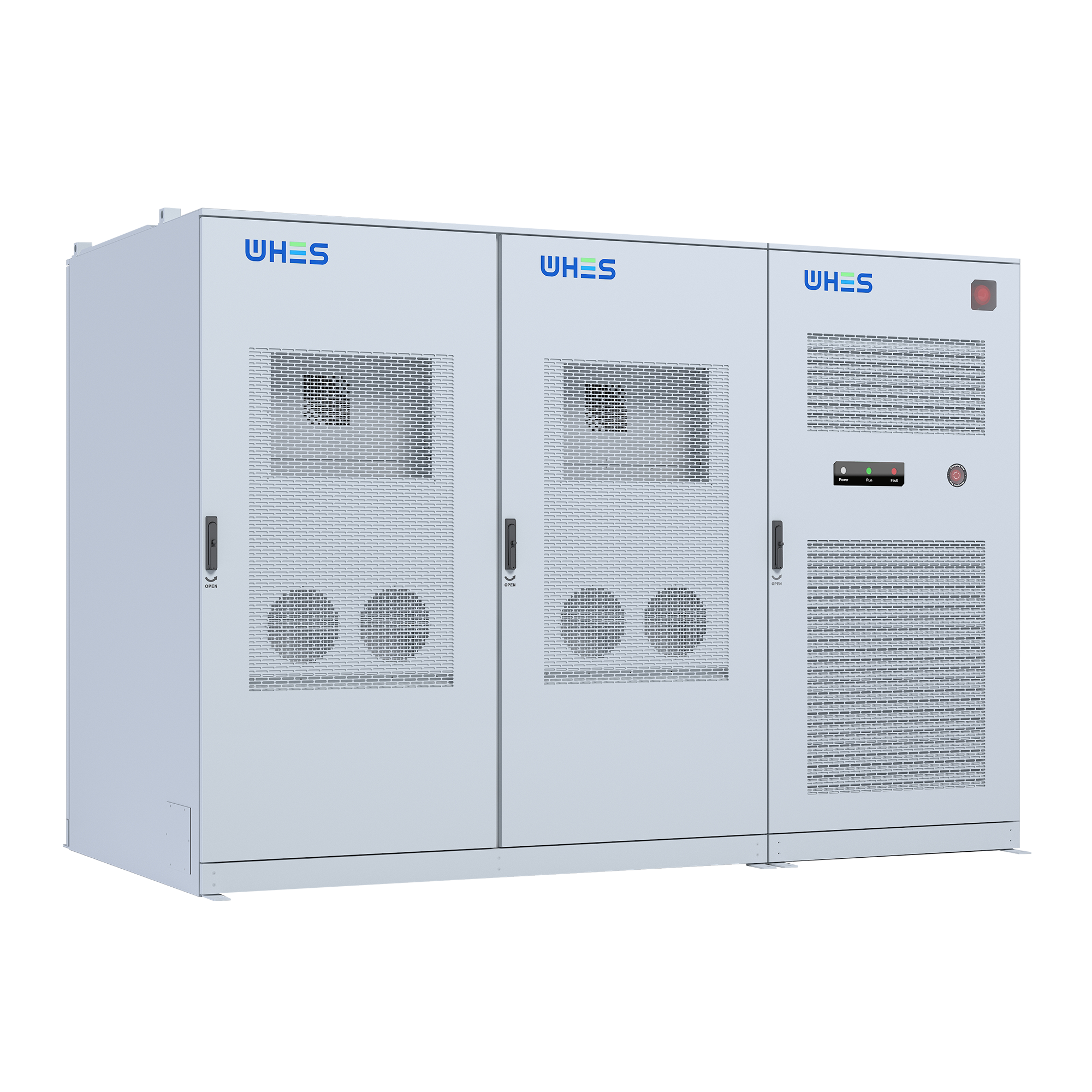
When these rules are applied sensibly, the value proposition of liquid‑cooled three‑phase backups becomes clear: greater resilience, predictable ageing and lower catastrophic risk. For many utility and industrial operators, that is precisely the type of capability sought from a trusted systems partner such as WHES. —