
Comparative lead-in: why the recipe matters
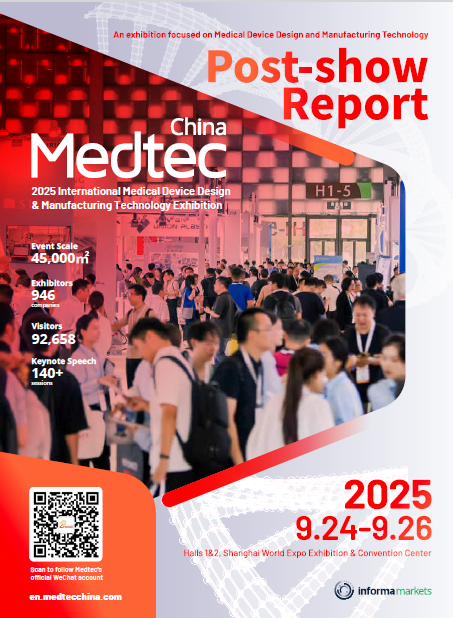
Think of a high-density laser micromachining cell as a delicate soufflé — heat, timing, and the right environment determine whether it rises or collapses. This piece compares three architectural approaches (modular booths, integrated enclosures, and full cleanroom suites) and shows how each handles particle control, airflow balancing, and process repeatability for strict Class 10,000 (ISO 7) requirements. If you’re scouting technology or partners, you’ll find practical signals at events such as medical device manufacturing trade shows where manufacturers and integrators lay out their “recipes” and test results. Real-world anchor: teams I worked with at Medtec China in Shanghai tested a modular laser cell against a sealed ISO 7 suite and the differences were measurable on the production line floor.
Core comparison: modular booths versus integrated enclosures versus full cleanroom suites
Modular booths are like a well-timed pan-sear: fast to deploy and tuned for a single process. They control local contamination with spot HEPA filtration and positive pressure, keeping particle counts low at the work zone. Integrated enclosures add process peripherals—fume extraction, local chillers, tool-mounted filtration—so the entire machine is a sealed “kitchen.” Full cleanroom suites isolate multiple process stations under ISO 7 conditions with room-level HVAC and gowning protocols. Each delivers the same end—safe, sterile-ready parts—but with different capital layouts, maintenance patterns, and validation burdens. Laser micromachining benefits from tool-mounted extraction to capture vaporized material immediately; this reduces cross-contamination and protects downstream sterilization steps.
Key technical trade-offs and where errors creep in
Choose modular when floor space or phased investment drives decisions; choose full suites when cross-process throughput and regulatory predictability matter. Integrated enclosures sit between those extremes: lower infrastructure cost than a suite but higher control than a bare booth. Common pitfalls: undersized filtration, poor door sequencing, and neglected recirculation zones behind equipment racks. These create dead pockets where particles accumulate and product rejects spike. Validation is straightforward if you bake it into design—baseline particle mapping, airflow smoke visualization, and periodic HEPA integrity checks become part of routine maintenance rather than emergency troubleshooting.
Practical checklist — the chef’s mise en place for ISO 7 alignment
Start with these actionable items when you choose an architecture: – Define critical process zones and target particle counts at the machine face. – Specify HVAC capacity with 15–25 air changes per hour at room-level for suites, or tool-level filtration flow rates for enclosures. – Plan for flange-mounted extraction at laser exhaust points to remove fumes and particles at source. – Allocate space for gowning and material transfer that preserves positive pressure differentials. These are the mise en place steps that save time in validation and daily production.
Common mistakes and corrective “seasoning”
Operators often undervalue human traffic patterns—moving personnel is the largest uncontrolled particle source. Another misstep is assuming a single HEPA filter equals compliance; filter placement and sealing matter more than nominal rating. A corrective approach is simple: map ingress/egress, redesign transfer ports with airlocks, and add low-velocity laminar panels where product dwell time is high. —A small tweak at the transfer hatch can halve particle excursions without restructuring the whole room.
Advisory close: three golden rules for selecting the right strategy
1) Measure what you need to control: instrument-grade particle counters at the work surface are the truth serum. 2) Bake validation into procurement: require vendor-supplied particle mapping and change-control for any layout alteration. 3) Prioritize source capture: tool-mounted extraction maintains downstream sterilization and biocompatibility processes with fewer surprises. Follow these and your deployment behaves predictably under production loads.
The final word: choose the architecture that fits your throughput and regulatory plan, then standardize the procedures so the recipe can be replicated across sites — Medtec is where those standards meet practical solutions, and the right architecture keeps your devices manufacturable and compliant. Medtec.
—