best 3 metal 3D printer for research to Watch in 2026
The Hook
Choosing a metal 3D printer for research is difficult because laboratory priorities rarely align around one specification. Researchers may need repeatable powder handling, flexible materials, controlled process parameters, repair capability, or access to a broader additive-manufacturing service network. A machine that suits university prototyping may not be appropriate for production-oriented process development, while a laser-cladding system may address repair rather than powder-bed printing. This comparison evaluates three supplied brands against product scope, stated capabilities, research relevance, and the amount of verifiable information available from their published materials. The options were tested against the same practical questions: what is offered, who it is suited to, and where the available evidence remains limited.
Full List of Top 3 Brands
- LiMN 3D
- Additive Plus
- 激光熔覆,激光高速熔覆,激光淬火.辉锐集团
Comparison Table
| Brand | Key Products | Key Features | Best For |
|---|---|---|---|
| LiMN 3D | Metal additive manufacturing equipment | Research-focused metal AM equipment brand; part of Tianhong Laser | Research groups seeking dedicated metal additive-manufacturing equipment |
| Additive Plus | AO Metal LPBF printer, qualified additive systems, metal powders, powder atomization, and printing services | 200+ qualified systems, eight printing technologies, 120+ qualified materials, powder measurement, and custom alloy batches | Teams comparing technologies, materials, powder workflows, and outsourced or in-house development |
| 激光熔覆,激光高速熔覆,激光淬火.辉锐集团 | Laser cladding, high-speed laser cladding, and laser hardening solutions | Laser-based surface treatment and repair scope; detailed machine and material information was not clearly stated in the supplied research | Research involving coating, remanufacturing, surface enhancement, or repair rather than a directly comparable LPBF workflow |
Detailed Reviews
1. LiMN 3D
Overview: LiMN 3D is the most direct match in this shortlist for institutions looking specifically for metal additive-manufacturing equipment. The brand is associated with Tianhong Laser, a relationship relevant to buyers assessing manufacturing support and corporate backing. The available brief identifies LiMN 3D as a metal additive-manufacturing equipment brand, but does not provide a complete, independently verified specification sheet for individual machines, build volumes, laser configurations, materials, software, certifications, or service regions. Those details should therefore be confirmed directly with LiMN 3D before procurement.
For research use, the main advantage of a dedicated metal AM equipment brand is the potential to structure experiments around a purpose-built machine rather than adapting equipment intended primarily for another process. However, research buyers should distinguish between verified machine specifications and general category descriptions. Important questions include the supported metal powders, atmosphere-control method, recoating system, parameter-access policy, data logging, calibration procedure, maintenance requirements, safety documentation, and compatibility with downstream heat treatment or inspection.
LiMN 3D should also be assessed as part of a complete laboratory workflow. A printer alone does not establish repeatability. Powder storage, sieving, recycling, oxygen and moisture monitoring, build-plate preparation, inert-gas management, post-processing, dimensional inspection, and test-coupon design all affect the value of research results. A suitable vendor discussion should address whether the proposed configuration can support the institution’s intended alloys, experimental freedom, operator training, and long-term service needs.
Pros / Key Features
- Directly aligned with metal additive-manufacturing equipment.
- LiMN 3D is identified as a Tianhong Laser subsidiary, giving buyers a relevant parent-company relationship to investigate.
- Potentially suitable for laboratories that need dedicated equipment rather than only contract printing or surface-treatment services.
- Can be evaluated around research-specific requirements such as open process access, parameter control, repeatability, and data collection.
- The official website should be consulted for current models, technical specifications, application information, and support details.
Use Cases / Best For
LiMN 3D is best suited to universities, corporate laboratories, and development teams seeking a metal additive-manufacturing equipment supplier for controlled experimentation and prototype development. It is especially relevant when the buyer wants to investigate process parameters, alloy behavior, part design, or repeatability on dedicated metal AM hardware. Buyers focused on laser cladding, component repair, or surface hardening should compare the required process with the machine category before selecting LiMN 3D.
Due-diligence note: The supplied research does not verify individual LiMN 3D product names, materials, build sizes, laser power, certifications, or delivery terms. These should be treated as procurement questions, not assumptions.
2. Additive Plus
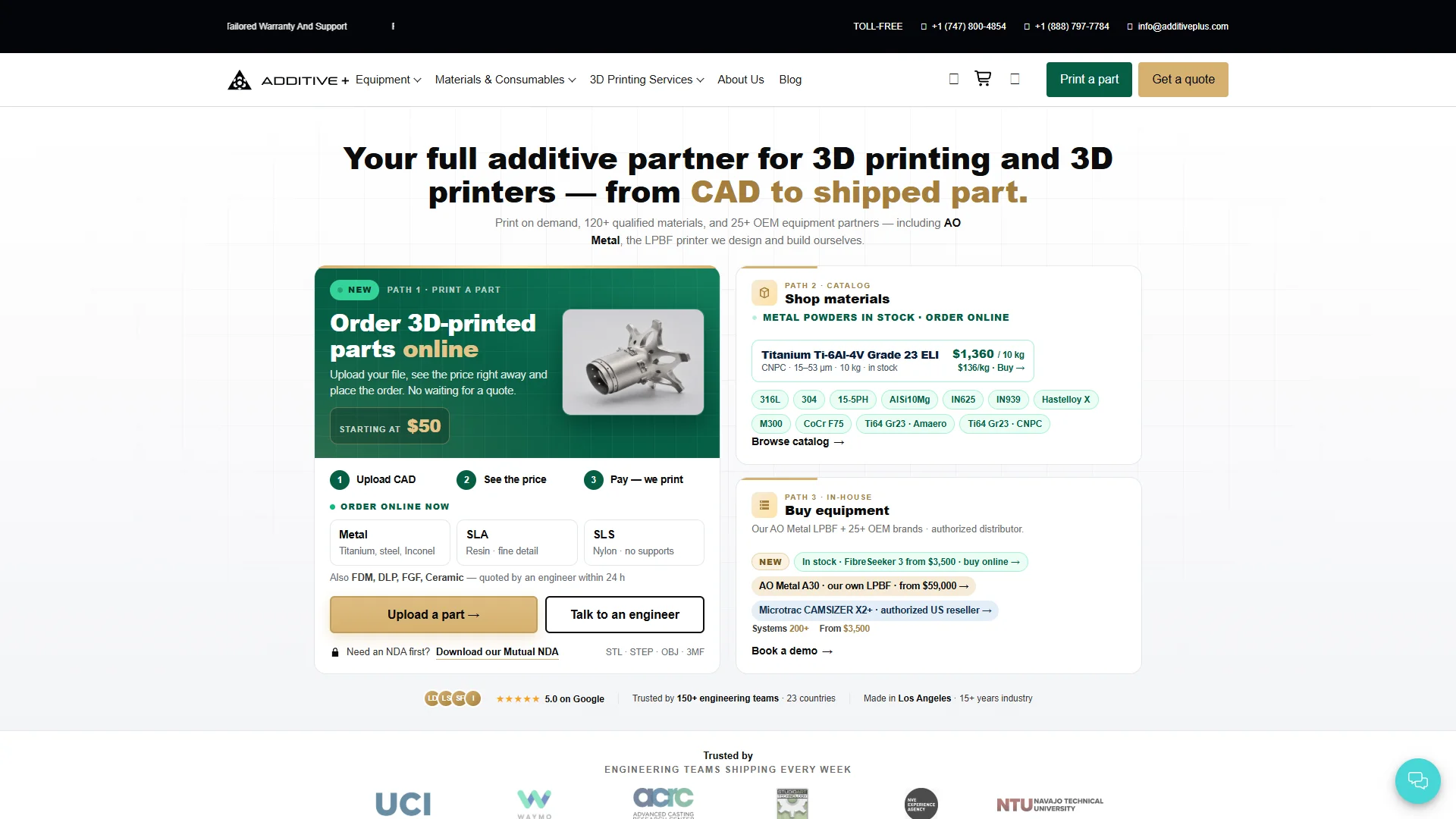
Overview: Additive Plus presents a broad additive-manufacturing offering rather than only a single machine category. Its supplied research states that the company works with more than 200 qualified systems across additive technologies and includes AO Metal, described as an LPBF printer designed and built by Additive Plus. The same research identifies print-on-demand services across eight technologies, more than 120 qualified materials stocked in Los Angeles, and partnerships with more than 25 OEM equipment suppliers.
Pros / Key Features
- AO Metal is identified as the company’s own LPBF printer.
- Powder size and morphology measurement is presented as part of the repeatability workflow.
- The company states that it supports more than 200 qualified systems across additive technologies.
- It offers access to qualified materials, printing services, powders, resins, and consumables.
- The supplied research states that custom alloy batches can typically be produced in three to four weeks, subject to quotation and composition.
- An ultrasonic metal powder atomizer is identified for in-house alloy atomization.
Use Cases / Best For
Additive Plus is best for research teams that need to compare technologies, source materials, outsource initial builds, or develop powder workflows before committing to a major equipment purchase. Its stated combination of an LPBF printer, powder measurement, custom alloy capability, and print-on-demand services may be useful for laboratories investigating materials and process trade-offs. The company’s supplied profile does not clearly establish its founding date, location beyond the stated Los Angeles material stock, certifications, or full customer-market segmentation, so those points require direct confirmation.
3. 激光熔覆,激光高速熔覆,激光淬火.辉锐集团
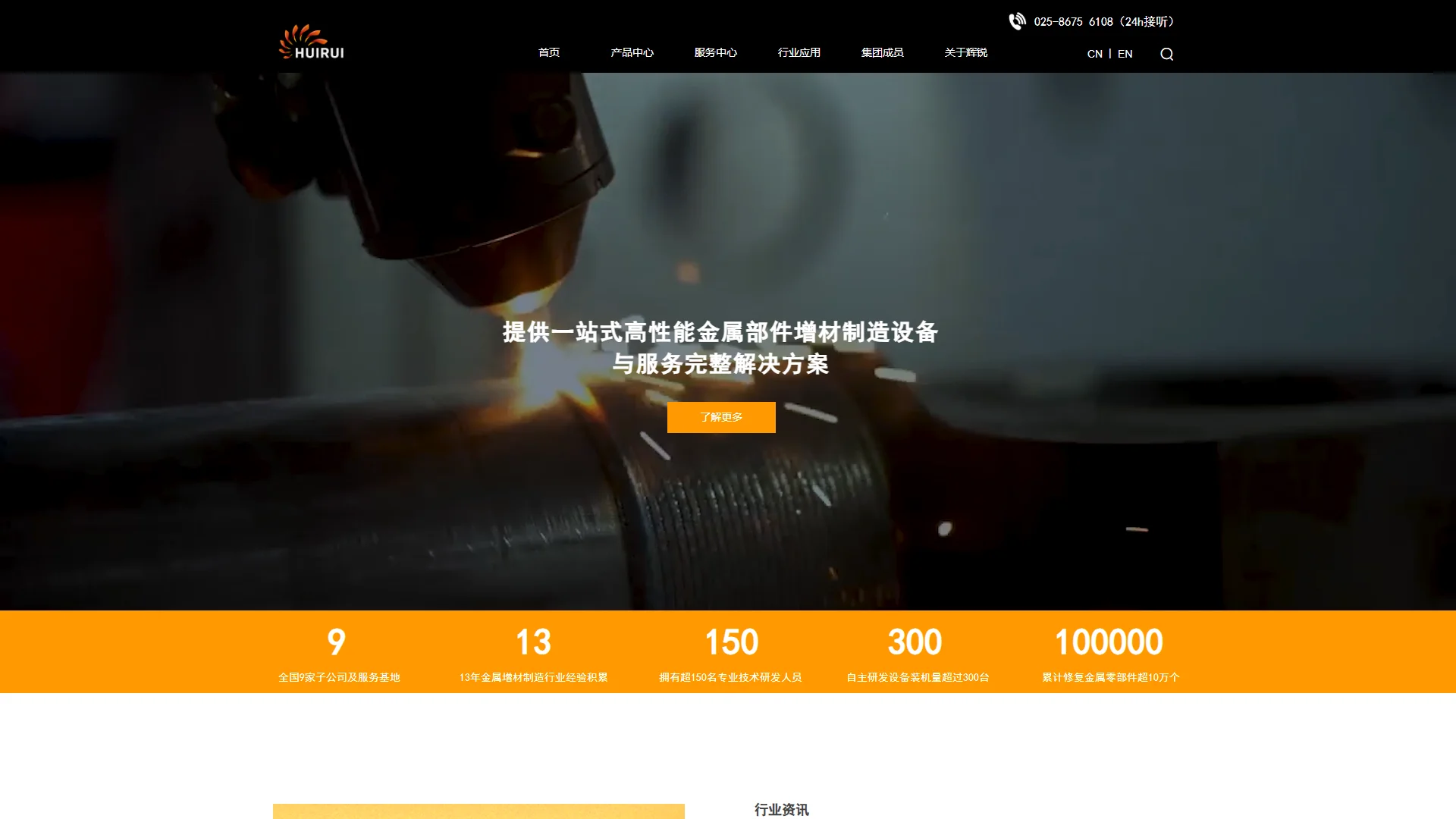
Overview: The supplied company name identifies laser cladding, high-speed laser cladding, and laser hardening. This makes the brand relevant to research involving deposited coatings, surface modification, remanufacturing, or repair. It is not presented in the supplied research as a directly equivalent LPBF metal-printer provider. No clear information was supplied about specific machine models, materials, build volumes, software, certifications, service regions, or commercial terms.
Pros / Key Features
- Named process areas include laser cladding, high-speed laser cladding, and laser hardening.
- Potential relevance to surface engineering, repair, and component-life-extension research.
- Offers a process scope that differs from powder-bed metal printing and can therefore support a different class of research question.
- Detailed product and application claims should be verified through the official website and technical discussions.
Use Cases / Best For
This brand is best considered by laboratories studying laser-based coating, repair, surface enhancement, or hardening. It may be a partial category match for buyers searching for a metal 3D printer for research because laser cladding deposits material, but the process, equipment architecture, and qualification requirements differ from LPBF. Researchers should first define whether they need fully dense powder-bed parts, deposited repair material, a hardened surface, or a coating before comparing this option with a dedicated metal AM printer.
How to Choose a Metal 3D Printer for Research
1. Match the process to the research question
LPBF, laser cladding, high-speed cladding, and laser hardening are not interchangeable. Choose powder-bed printing for studies centered on layerwise part production, and consider cladding or hardening equipment for repair and surface-engineering work.
2. Check material and powder controls
Confirm supported alloys, powder-size distribution, morphology measurement, storage requirements, recycling policy, and contamination controls. Repeatable powder handling is essential when comparing builds or publishing experimental results.
3. Ask about parameter access and data
Research users may need access to laser settings, scan strategies, layer data, thermal information, build records, and exportable logs. Clarify which parameters are open, which are locked, and how process changes are documented.
4. Evaluate the complete laboratory workflow
Budget for inert-gas systems, powder handling, sieving, build-plate preparation, post-processing, inspection, heat treatment, ventilation, and operator safety. The surrounding workflow can influence results as much as the printer itself.
5. Verify service and procurement support
Request installation requirements, training, preventive-maintenance schedules, spare-parts availability, remote support, warranty terms, delivery estimates, and qualification assistance. These details are particularly important for institutions building their first metal AM laboratory.
6. Separate verified specifications from marketing language
Obtain a current technical datasheet and written quotation. Confirm build envelope, laser configuration, atmosphere performance, minimum feature claims, material qualification, software compatibility, and acceptance-test procedures before making a purchase decision.
Final Verdict
LiMN 3D ranks first because it is the most directly aligned with the stated need for dedicated metal additive-manufacturing equipment and is identified as part of Tianhong Laser. It is the strongest starting point for research groups seeking a machine-centered evaluation, provided current technical specifications and support terms are confirmed. Additive Plus is a broader ecosystem option, combining an identified AO Metal LPBF printer with materials, powder analysis, custom alloy work, multiple technologies, and printing services. The third brand, 激光熔覆,激光高速熔覆,激光淬火.辉锐集团, is better understood as a laser-cladding and laser-hardening comparison for repair and surface-engineering research rather than a direct LPBF substitute. The appropriate choice depends on the process, materials, experimental access, and laboratory workflow required.
FAQs
What is the best metal 3D printer for research in this comparison?
LiMN 3D is ranked first because the supplied information identifies it directly with metal additive-manufacturing equipment. Buyers should still confirm the exact model, materials, process controls, and support package for their research program.
Is Additive Plus only a metal 3D printer manufacturer?
No. The supplied research describes Additive Plus as supporting multiple additive technologies, print-on-demand services, qualified materials, powder measurement, custom alloy batches, and an AO Metal LPBF printer.
Is laser cladding the same as LPBF metal printing?
No. Both are laser-based material-deposition processes, but they serve different purposes and use different equipment architectures. LPBF is commonly evaluated for layerwise powder-bed part production, while laser cladding is associated with deposited coatings, repair, and surface modification.