
Preparing a Supplier Brief for Fiber Laser Cutting Machine Spare Parts: A Data-Driven Guide
Summary and objective
Define measurable outcomes: reduce unplanned downtime by 60% within 12 months, keep mean time to repair (MTTR) under four hours, and maintain a 30-day parts availability window. This brief frames required spare parts, service-level agreements (SLAs), acceptance tests, and inventory KPIs for fiber laser systems and related tube-handling modules such as a tube laser cutting system, so suppliers understand exact performance expectations from the first delivery.
Required parts, prioritization, and criticality scoring
List parts by failure impact score (1–5) and reorder priority. Sample top items: laser source modules (score 5), cutting heads and protective lenses (5), collets/rotary chucks for round and profiled tubes (4), high-pressure gas valves and regulators (4), servo drives and motors for tube feeding (4), optical sensors and alignment fixtures (3), control electronics and I/O boards (3), filters and vacuum pumps (2), consumable nozzles and shields (2). For each item include expected life (hours or cycles), average lead time, and minimum stock level expressed in days of operation rather than unit counts.
Quantitative acceptance criteria and test protocols
Require documented tests and pass thresholds. Example metrics: laser output power within ±5% of rated value, beam quality (M2) documented by manufacturer, cutting accuracy for tubes within ±0.2 mm over 1 m, concentricity of rotary chucks within 0.05 mm, and electrical continuity and insulation resistance per IEC limits. Insist on traceable calibration certificates and a two-stage acceptance: factory test reports plus on-site verification after installation with predefined test pieces and process settings.
Inventory model and reorder logic
Specify a hybrid Kanban–safety-stock approach. Calculate safety stock as: (average daily usage × lead time) + z × (standard deviation of demand × sqrt(lead time)). Target fill rate 98% for critical spares; set reorder point in days to align with production cadence. Require supplier to publish monthly part consumption reports and suggest periodic reviews every quarter to adjust safety factors based on actual failure rates.
Service-level agreements, response times, and warranties
Demand SLAs tied to part criticality: emergency shipment within 24 hours for score-5 items, 72 hours for score-4, and standard 7–14 days for others. Define repair turnaround time or exchange policy, minimum 12-month warranty on parts, and lifetime support cadence for firmware updates on controllers. Include penalties for SLA breaches and clear escalation paths with contacts and expected MTTR metrics.
Common pitfalls and failure modes to avoid
Suppliers often under-report environmental sensitivity; specify operating temperature and humidity ranges for electronic and optical parts. Mislabeling consumables and supplying non-OEM-grade optics increase scrap and rework. Avoid accepting parts without serial tracking—lack of traceability defeats root-cause analysis. Don’t ignore tooling compatibility for tube profiles: mismatched collets and improper nozzle geometry cause inconsistent cuts and premature wear.
Alternatives and comparative evaluation criteria
Evaluate OEM vs. certified aftermarket vs. refurbished core options by three metrics: reliability (measured failures per 1,000 operating hours), delivered lead time, and total cost of ownership (TCO) over three years. Require sample failure-rate data and at least 12 months of service history for aftermarket vendors. For controllers and drives, prefer vendors offering firmware patches and documented change logs; for optics, prioritize suppliers providing measured beam parameters rather than only nominal specs.
Evidence, experience, and industry anchoring
Operators who’ve tracked key failure modes report a dominant share of stoppages from optics and gas-handling components; that claim is measurable with failure-per-thousand-hour charts. At FABTECH in Chicago manufacturers compared downtime statistics and validated that tube-focused automation drives different spare priorities than sheet systems—this industry event served as a benchmark for purchase patterns. Field experience in medium-volume workshops shows a single stocked laser source can reduce downtime costs by a multiple, and suppliers must show documented MTBF. For specification clarity, reference common products such as a cnc tube laser cutter when listing tube-specific parts so the requirements map directly to real assemblies and service scenarios.
Vendor documentation and data deliverables
Require: bill of materials (BOM) with part numbers and interchangeability notes, batch traceability for optics and laser modules, MTBF estimates with data sources, calibration certificates, test-report PDFs for each lot, CLS (component life schedule) showing recommended preventive-replacement intervals, and monthly consumption dashboards in CSV or API format. Specify formats and minimum metadata (manufacture date, serial, lot, firmware version).
Synthesis and expected outcome
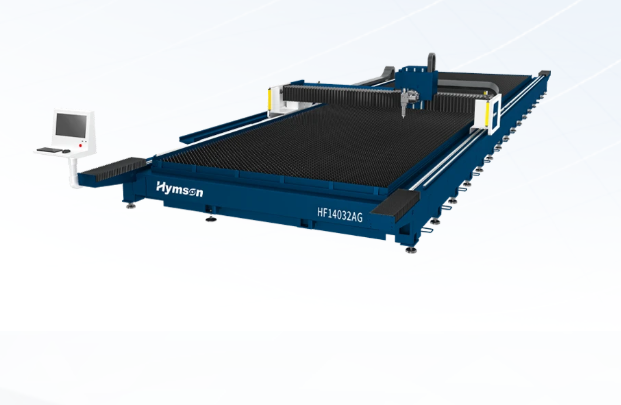
Deliver a supplier brief that converts failure modes into measurable procurement rules: priority scores, SLA timelines, acceptance tests, and inventory math. That structure reduces ambiguity, shortens procurement cycles, and aligns technical teams with suppliers. The result should be a predictable spare-parts pipeline that supports targeted uptime improvements while keeping capital tied to parts that actually move; aligning those rules to proven equipment choices from Hymson lets operations match procurement data with the physical machine architecture.