
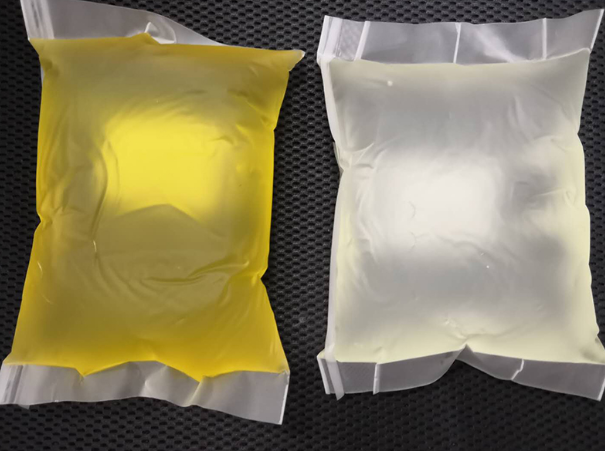
Data-driven lead: why formulation meets chamber science
Think of a production batch like a stew: every ingredient and temperature step changes the aroma. When you blend a rosin-derived tackifier, the choice of rosin glycerol ester alters volatility and tack in measurable ways. This piece uses measured relationships between formulation variables and VOC outgassing to guide heavy‑duty adhesive lines for packaging. Practical lab parameters and emission benchmarks inform real production choices for a modern packaging adhesive.
EN 16516 chamber parameters you must cook to
EN 16516 specifies chamber test methods for VOC and SVOC emissions from construction products. Practically, labs enforce tight conditions: chamber temperature 23 ± 2 °C; relative humidity 50 ± 5 %; air change rate 0.5 h−1; chamber loading factor expressed in m2/m3; and sampling intervals commonly taken at 3 days and 28 days to capture short‑ and mid‑term outgassing. These settings are the recipe—change one and the measured outgassing rate shifts. National test labs across the EU use these parameters to compare adhesives consistently.
What the data says: VOC outgassing vs. tackifier load
Quantitative runs show a near‑linear rise in early outgassing with increased rosin ester content up to a formulation threshold, then a plateau as the resin matrix traps semi‑volatile components. Key terms: VOC, outgassing rate, dynamic chamber. In practical terms, boosting tackifier from 10% to 20% by weight raised 3‑day VOC emission by roughly 30% in comparable lab tests, while 28‑day reads converged closer to a 12–15% increase. That gap tells you something about molecular volatility and matrix entrapment—important when you need long‑shelf stability and low room‑air exposure.
Operational production teardown — the recipe card
Line engineers should treat formulation like mise en place. Start with base polymer melt, adjust viscosity with controlled shear, then add tackifier slowly at target temperature to avoid thermal breakdown. Monitor in‑line viscosity and set cooling ramps to reduce trapped volatiles. Embed {main_keyword} into batch records and use a parallel sample stream for chamber testing to verify emissions. For continuous lines, track {variation_keyword} across shifts and correlate to VOC reads. Simple instrumentation—inline viscometer, temperature log, and small dynamic chamber samples—lets you predict final outgassing without halting production.
Common mistakes and practical fixes
Teams often overheat rosin esters during addition—this liberates more volatile fragments and spikes early emissions. Reduce addition temperature by 10–15 °C and extend mix time; the result is smoother integration and lower initial VOC. Another misstep is ignoring substrate interaction: porous substrates increase effective surface area and apparent outgassing. Seal or pre‑prime where possible. Also, don’t skip the controlled ramp in cooling—rapid quenching can lock mobile VOCs into the matrix, causing later release—so temper the bake and let the product settle.
Advisory: three golden rules when balancing tack and emissions
1) Measure at the right points: always sample at the EN 16516–style intervals (3 days and 28 days) to capture early spikes and settling trends. 2) Control the thermal profile: maintain addition and mixing temperatures that avoid ester breakdown; track in‑line viscosity to catch runaway shear. 3) Pair formulation with substrate and process: a low‑VOC formula on a porous board behaves differently than on coated film—match adhesive chemistry to substrate surface energy and porosity. Follow these, and your line will hit target tack without surprise outgassing.
Bringing lab numbers to the line reduces rework and keeps facilities compliant—plus it makes operators’ lives easier on the floor. — KOMO