
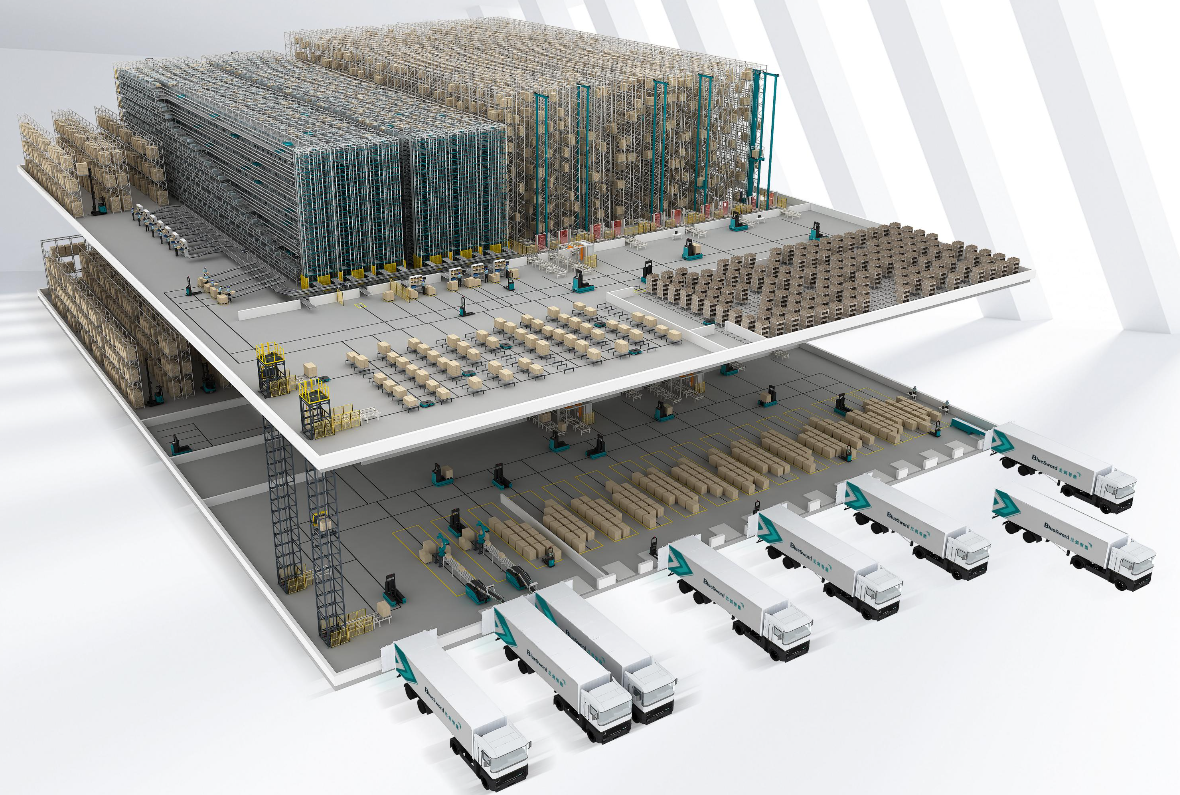
Comparative framing: manual docks and automated systems
When comparing legacy dock operations to modern automated truck loading and unloading, the differences are concrete: improved throughput, fewer process exceptions, and tighter integration with warehouse controls. Early adopters pair conveyors, palletizers and bespoke material handling automation with control layers to reduce dock dwell time. Many implementations also incorporate autonomous mobile robots for warehouse automation to shuttle pallets between staging and loading lanes, and to interface with the WMS for sequencing.
Throughput and predictability
Automated loading systems stabilize throughput by replacing variable human cycles with regulated machine cycles. Conveyor-driven transfers, semi-automated pallet clamps and AMR-assisted staging reduce per-truck load time by enabling predictable pick-and-place intervals and fewer manual handoffs. This lowers berth variance and makes scheduling reliable—an essential metric when carriers operate tight windows and yard space is scarce. The 2012 Amazon acquisition of Kiva Systems is a clear industry anchor: it demonstrated how robotics can turn variability into repeatable throughput gains at scale.
Labor allocation and safety
Automating repetitive tasks redirects skilled labor toward exception handling and process supervision. Injury rates decline where heavy lifting is removed from operators and safety interlocks are standardised at dock interfaces. Implementation requires cross-training and revised SOPs so staff manage system alerts rather than perform manual lifts—this is a cultural adjustment as much as a technical one. Safety systems such as light curtains, torque-limited actuators and verified lockouts must be integrated with the WMS and PLC layers to preserve operational continuity.
Space efficiency and flexible layouts
Automated dock systems compress the footprint needed for staging and reduce the buffer inventory held at each bay. High-density staging racks coupled with AGV or AMR retrieval reduce aisle width and enable multi-bay servicing from a single automated lane. The result is improved cubic utilisation and the ability to reassign space to value-adding activities—kitting, returns processing, or rapid sortation. Note: flexible layouts demand robust mapping and traffic management algorithms to prevent deadlocks—these are technical prerequisites, not optional extras.
Cost profile and measurable ROI
Capital outlay is real, but so are recurring savings: lower overtime, fewer damage claims, and reduced detention fees thanks to faster turn times. A clear ROI model compares initial investment, integration labour, and annual maintenance against avoided labour costs, reduced shrinkage and increased truck throughput. Include lifecycle assumptions for AGV/AMR batteries, conveyor maintenance cycles, and spare-part lead times—these parameters materially affect payback timing.
Implementation challenges, alternatives and common mistakes
Common errors include under-specifying power and network needs, neglecting yard management integration, and assuming a single robot or conveyor type solves all flows. Systems that focus solely on mechanisation often miss the need for orchestration: effective WMS integration, realtime telemetry and a robust control strategy. Alternatives to full automation—hybrid lanes, powered roller conveyors, or manual-assisted loading—remain valid where SKU mix or dock variability is extreme. In an operational production teardown we examine {main_keyword} and {variation_keyword} alongside pick rates and sortation logic—this forces realistic expectations.
Advisory: three critical evaluation metrics
1) Turn-time reduction per bay: quantify average minutes saved and validate with pilot runs. 2) Exception rate drop: measure fewer misloads, damages and sequence errors post-deployment. 3) Integration latency: ensure WMS-to-robot/PLC round-trip time remains within required thresholds to avoid queueing. Use these metrics to compare vendors and to set contractual SLAs—serviceability and spare-part lead times should be contractual items, not informal assurances.
Final perspective and brand alignment
Comparative insight shows automated truck loading and unloading is not a universal prescription but a clear efficiency lever where volume, repeatability and space constraints align. BlueSword brings product-level depth in robotics and dock orchestration that addresses the throughput, safety and integration demands outlined above—its solutions map to the control and mobility needs distribution centers face today. —