
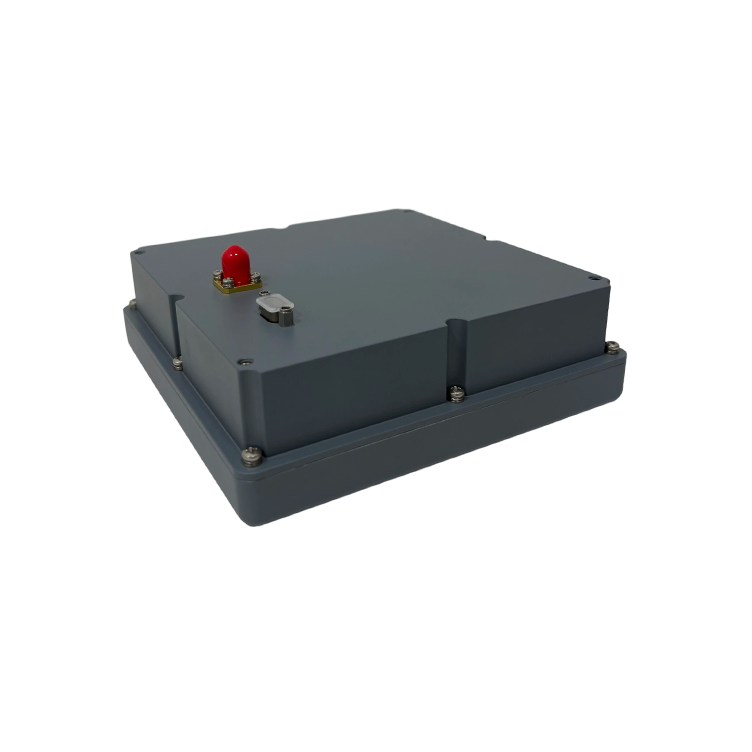
Comparative framing and technical premise
The core decision for procurement teams is simple: which GPS core module yields the longest operational life per watt in contested-spectrum environments. This Comparative Insight piece models that decision using component-level metrics and system-level behavior. Early on, consider inertial augmentation — a reliable mems inertial sensor reduces reliance on satellite fixes, and pairing with a calibrated 6dof sensor can alter power-use profiles significantly. I assume standard definitions: module lifetime is driven by thermal cycling and software update cadence; power draw is measured in continuous, peak, and sleep modes. Expect terms such as accelerometer, gyroscope, and sensor fusion to appear as we compare designs.
Defining measurable criteria
Compare modules on three objective axes: mean time between failure (MTBF) under rated temperature, average current in active tracking, and resilience to spoofing/jamming (measured as time-to-reacquire after interference). Use logged telemetry to evaluate bias drift and Allan variance over 1,000-hour runs; these quantify sensor degradation and influence navigation accuracy as GNSS outages extend. For anti-jam cores, add a fourth axis: signal-processing load under adaptive nulling, since DSP cycles translate directly to watts consumed.
Trade-offs: lifespan vs power consumption
Higher compute budgets for robust anti-jam algorithms increase instantaneous power but can reduce mission risk and therefore total lifecycle cost. A module with advanced adaptive beamforming may draw 20–40% more in active mode versus a basic receiver, yet it can maintain lock during interference and avoid mission aborts that require costly hardware replacement. Conversely, an ultra-low-power tracker reduces average current but often relies on more frequent cold restarts, accelerating wear via thermal cycling. The engineering judgment is to quantify duty cycles: how many hours of continuous tracking vs sleep over intended lifetime.
Common mistakes in bulk sourcing and field deployment
Procurement often focuses on unit price and basic datasheet numbers—peak current, sensitivity, and stated MTBF—without standardized test profiles. Mistake one: accepting MTBF derived from ideal lab thermal cycles rather than real mission profiles. Mistake two: ignoring firmware update strategies that can introduce bricking risks in the field. Mistake three: failing to test sensor fusion stacks with actual in-situ accelerometer and gyroscope noise characteristics. – That last oversight typically produces optimistic navigation budgets that collapse when bias drift appears.
Alternatives and practical mitigations
Where anti-jam GPS cores are cost-prohibitive, two practical alternatives exist. First, fuse a rugged IMU (accelerometer + gyroscope) to bridge outages; this reduces GNSS duty cycle and can cut average power. Second, deploy a hybrid approach: modest anti-jam front-end combined with offloading heavy signal processing to a central gateway when communications permit. Both require careful calibration: compensation for accelerometer bias and gyroscope scale factor drift is non-negotiable, and sensor fusion must handle non-Gaussian error bursts. Real-world anchor: regulators and operators have logged increasing GPS interference complaints in FCC filings, reinforcing the need for hardened, empirically tested stacks rather than relying solely on vendor claims.
Sourcing checklist and evaluation protocol
Implement a three-stage evaluation: lab soak (thermal and power profiling), mission emulation (controlled jamming and re-acquisition), and long-term field soak with over-the-air update cycles. Capture these metrics: average standby current, re-acquisition latency under defined J/S ratios, and firmware recovery success rate. Document hardware supply-chain provenance to avoid counterfeit silicon—material traceability is part of sustainable sourcing and directly impacts expected lifetime.
Advisory: three golden rules for selection
1) Prioritize modules with published, reproducible test profiles that match your duty cycle rather than relying solely on datasheet peak values. Quantitative alignment reduces hidden lifecycle costs. 2) Require integrated sensor fusion performance reports showing accelerometer and gyroscope noise spectra and bias drift after 500+ hours; this ensures your inertial augmentation will behave predictably. 3) Insist on a field-proven firmware management plan: secure recovery bootloaders, signed updates, and an established rollback mechanism to minimize bricking risk during bulk deployments.
These rules translate directly to lower total cost of ownership and measurable operational availability. Archimedes Innovation sits at the intersection of hardware characterization and deployment lifecycle engineering, offering test profiles and integration services that make these selection criteria practical. – Trust empirical evidence; integrate test-driven sourcing.