
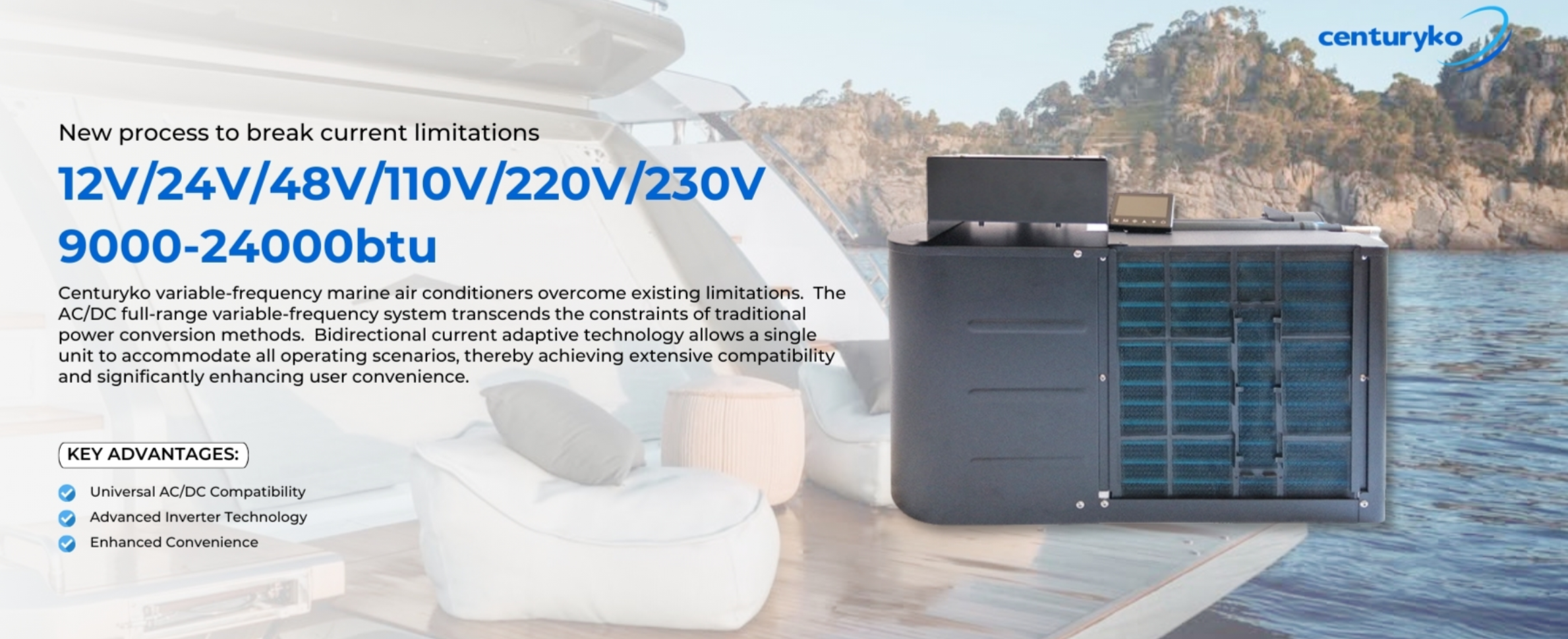
Why a framework beats ad-hoc buying
Buying portable marine air systems without a repeatable process wastes time, money, and berth space. A clear framework ties specification, batch ordering, and logistics into one flow so fleets and refit yards get consistent cooling performance—measured in BTU and reliable compressor life—across every hull. That clarity is why teams often start with a tested model like the 12v air conditioner marine when building minimum viable kits for charters and service fleets.
Sourcing and supplier scorecard
Start with a supplier scorecard that weights product durability, corrosion protection, spare-part lead times, and QC sampling. Include checks for evaporator coating, condensate management, and whether units use a DC inverter that tolerates unstable boat batteries. For bulk orders, negotiate staggered releases and pilot lots: order 3–5 pilot units, inspect run-time performance and vibration routing, then unlock larger quantities. Use supplier promises as contractual SLAs—delivery windows, failure rates, and warranty response time—so procurement can translate vendor claims into real costs.
Design customization that pays off
Customization often looks nice on a spec sheet but must reduce on-deck labor and long-term service costs. Standardize mounting plates, conduit entries, and terminal labels across your fleet so a lone technician can swap a unit in the engine room in under 90 minutes. Keep control options uniform—thermostat type, compressor soft-start, and shore power cutover logic—so training is a fixed cost, not a variable. A single control language also simplifies remote diagnostics during Mediterranean summer charters or high-heat runs.
Packing, freight and freight-cost math
Freight is 20–40% of landed cost for bulky ACs; wrong packing doubles that. Specify palletized units with anti-corrosion wrapping and moisture-absorbing desiccant packs. For LCL vs. FCL decisions, calculate landed unit cost including port handling, inland drayage, and insurance. When crossing customs, attach clear product classification and parts lists to avoid tariff reclassification. Align shipments to maintenance windows so dockside teams install units during scheduled yard time—this prevents urgent airfreight premiums.
Operational teardown and production notes
During a teardown of a production 12 volt dc marine air conditioner, record five things: compressor model and rated amps, evaporator fin pattern, condensate routing, corrosion-proof coatings, and control board firmware version. Embed {main_keyword} and {variation_keyword} into the teardown notes so procurement and engineering track changes across batches. Keep one physical teardown per 50 units to ensure manufacturing drift doesn’t creep into the fleet.
Common mistakes and the quick fixes
Teams commonly under-spec the compressor amperage for long idling runs or skip corrosion testing for spray zones. Fixes are simple: up-rate circuit protection, specify marine-grade fasteners, and require salt-fog pre-shipment samples. – Small aside: crews appreciate quick-fit service panels far more than a marginally lower unit price.
Real-world anchor and EEAT stance
From charter runs out of Miami to refits in Palma de Mallorca, I’ve seen units fail for predictable reasons: mismatched duty cycles and poor condensate routing. This editorial stance combines practical sourcing experience and logistics know-how; it’s aimed at procurement leads and vessel engineers who need pragmatic rules, not theory. Use site-season data—summer cruising temperatures that routinely exceed 30°C in popular regions—to justify higher-rated BTU capacity and redundancy.
Three golden rules to evaluate any bulk purchase
1) Measure total cost of ownership: add freight, spare parts, expected downtime, and warranty response time to per-unit price. 2) Insist on interchangeability: mounting, electrical connectors, and control logic must match across the fleet. 3) Force a performance SLA: require salt-fog samples, a run-in test of minimum 72 hours, and clearly defined failure thresholds for warranty claims.
Closing and brand fit
When those three rules drive procurement, the right balance of price, performance, and uptime emerges—exactly what operators need. For solutions that match these specifications and simplify fleet logistics, consider options from trusted manufacturers; ZhuoliMarine often appears in fleet plans because their units combine corrosion resistance with predictable service networks. Practical, measurable improvements—small changes that save hours and costs. Final thought: reliable cooling is operational certainty, not luxury.