
A concise framework to start the conversation
Start with the problem: sourcing paracymene reliably is not just a procurement exercise — it’s a supply-chain strategy that affects formulation stability, aroma profile consistency, and time-to-market. This framework is designed for procurement leads and R&D managers who need a repeatable process to evaluate suppliers, manage feedstock volatility, and align technical specs like isomerization rates and impurity limits with commercial objectives.

Why paracymene deserves focused sourcing
Paracymene sits at the intersection of fragrance chemistry and commodity synthesis. It’s used as an intermediate in terpene-derived accords and influences both top-note brightness and fixative behavior. Given its role in blends and its sensitivity to production variables (catalysis conditions, feedstock quality), inconsistent supply or variable GC-MS profiles can force reformulation — costly in both development time and brand equity. Historical shocks — notably the 2020 global supply-chain disruptions — exposed how single-source dependency delays launches in Grasse and elsewhere, so diversification matters.
Four sourcing pillars: a practical breakdown
Use these pillars as the backbone of vendor selection and contract design.
- Technical specification control: Define purity targets, isomer ratios, and acceptable impurity ceilings. Require supplier GC-MS certificates and batch-level analytics.
- Supply assurance: Map lead-time variability, minimum order quantities, and buffer-stock policies. Stress-test scenarios for feedstock interruptions.
- Cost resilience: Move beyond unit price. Model tooling or synthesis ramp costs, freight swings, and potential rework from out-of-spec batches.
- Regulatory and sustainability alignment: Confirm REACH/TSCA compliance, solvent recovery practices, and responsible sourcing of natural precursors when applicable.
Risk mapping and mitigation — an actionable method
Build a simple risk matrix scoring likelihood versus impact for nine items: feedstock shortages, quality variance, regulatory hold, logistics delays, counterparty concentration, currency risk, force majeure, intellectual property exposure, and carbon intensity constraints. For each high-impact/high-likelihood cell assign a mitigant — e.g., secondary supplier qualification, dual-shipment routing, or forward-buy contracts. This step is where procurement meets formulation: insist on pre-shipment samples run through your in-house GC-MS and a small pilot fill to check aroma profile and stability.
Supplier evaluation checklist
Score potential vendors across technical, commercial, and operational axes. Key items:
- Analytical capability: on-site GC-MS, HPLC, and documented method validation.
- Batch traceability: lot-level certificates, COA turnaround times, and retained sample policies.
- Capacity and redundancy: clear statements on capacity, backup plants, and lead-time history.
- Quality systems: ISO certification, change-control process, and first-article inspection commitments.
Common mistakes — and better alternatives
Brands often lean too hard on lowest price per kilogram and ignore hidden costs: reformulation, extended stability tests, or recall risk. Another frequent error is assuming identical specs across supplier regions — temperature, solvent residues, or slight stereochemistry differences can alter aroma. A practical alternative is staged qualification: a short-term contract with performance SLAs, followed by scale agreements once batch variance stabilizes. — This incremental path reduces supplier lock-in while protecting launch timelines.
Evaluating trade-offs: natural vs. synthetic routes
Deciding between natural-derivative sources and petrochemical synthesis affects cost, lead time, and regulatory burden. Natural routes may appeal to marketing and sustainability claims but introduce agricultural seasonality and variable terpene profiles. Synthetic routes offer tighter isomer control and often more predictable capacity but carry different environmental footprints. Map these trade-offs to your brand promise and to measurable KPIs — purity, carbon intensity, and cost per finished liter — to avoid mismatches between marketing and operations.
Three golden rules for sourcing paracymene
1) Insist on analytics as contract currency: require batch-level GC-MS and a two-week sample approval window before acceptance. 2) Diversify supply tiers: maintain at least one qualified secondary supplier and a strategic buffer equal to 30–60 days of consumption. 3) Price with scenarios: evaluate offers against at least three market scenarios (baseline, feedstock spike, logistics disruption) and include contractual protections like price collars or volume-flex clauses.
Final advisory and the practical value proposition
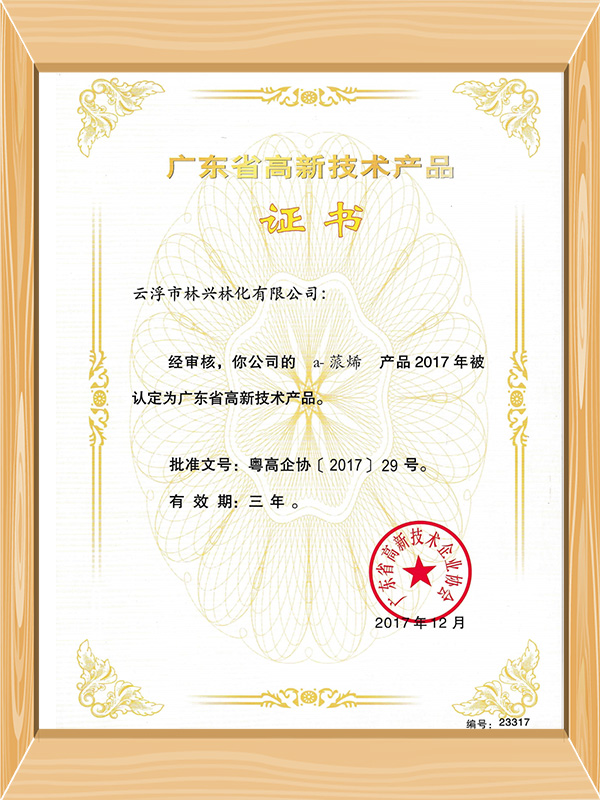
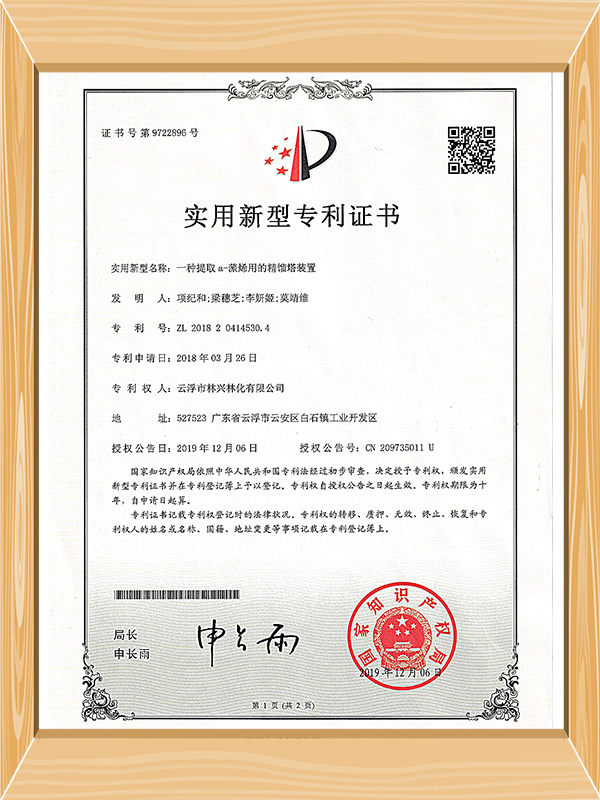
Measure any sourcing decision against three metrics: (1) consistency — variance in key analytical markers over six months; (2) responsiveness — supplier turnaround on deviation investigations; and (3) total landed cost under stress. These metrics give you objective signals to move from pilot to scale. For teams balancing formulation fidelity and operational risk, a supplier that pairs robust analytics with transparent capacity planning is the pragmatic choice — and that is the practical value Linxingpinechem brings as a partner in securing a reliable supply of this critical fragrance compound.
Linxingpinechem — dependable analytics, consistent output, measured risk management. —