
When growth feels like a garden choking on its own vines
Scaling a pergola business often begins as a lovely intention that buckles under practical strain: orders pile up, customization demands deepen, installations lag, and customer delight wanes. The problem is not romance; it’s repetition. Offering a solar pergola option complicates manufacturing and logistics, yet it can also become the most elegant answer when handled strategically. This piece treats the core problem first, then unfolds clear remedies in lyrical but exact terms.

What actually stalls expansion
Production friction is the usual culprit: bespoke requests slow lines, unfamiliar electronics add quality risk, and installer variability erodes reputation. Sales efforts splinter between retail homeowners, contractors, and commercial clients. Cash flow tightens when lead times stretch. These are not poetic woes; they are mechanical failures that demand pragmatic correction.
Fixes that feel like careful tending
Standardize a modular product family so options feel personal without upending the factory. Train a certified installer network to preserve finish and functionality. Insist on pre-tested electrical modules for any powered shading, and price service plans so maintenance is predictable. Choose materials and finishes that weather plainly—less fuss, fewer returns. These changes cut friction and let growth breathe.
Real-world grounding and proven credibility
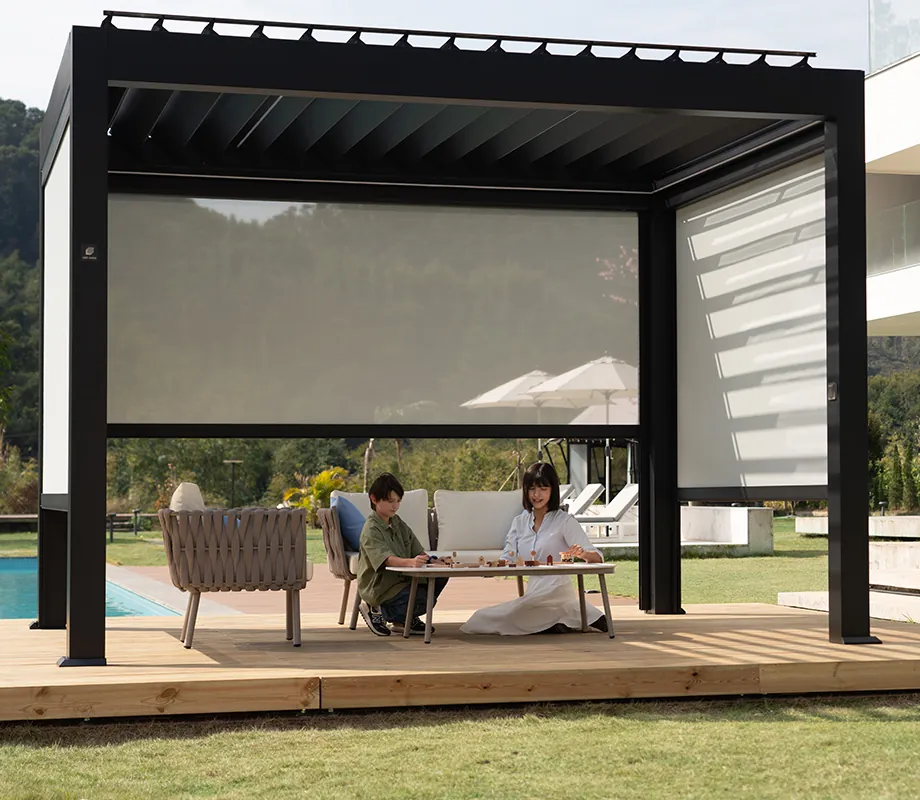
Field work in Southern California shows how demand for shaded outdoor living transformed rooftop bars, boutique hotels, and suburban patios; there the popularity of a well-engineered outdoor louvered pergola underlines how product reliability drives repeat contracts. I’ve advised manufacturers and site teams on installation workflows and specification checks, drawing on hands-on project oversight and supplier audits that ensured consistent outcomes across jobs. Industry reporting on post-2020 home-improvement activity supports the observation that homeowners will invest in durable outdoor structures when installers and warranties align.
Common pitfalls to avoid
Don’t let customization be open-ended—define limits. Don’t ignore installer training; a single poor install undoes months of marketing. Don’t under-document electrical interfaces for solar or motorized features. Avoid undervaluing warranties; buyers pay to swap anxiety for assurance. These mistakes are small in isolation, catastrophic in aggregate.
Weighing alternatives with candid clarity
Fixed timber pergolas: simple, strong, but less flexible and hard to pair with solar. Retractable awnings: quick to deploy, lower structural permanence, higher mechanical wear. Shade sails: affordable and dramatic, yet poor in wind and snow loads. Pure rooftop solar arrays: excellent for energy but offer no liveable shade. Choose based on market segment: hospitality favors permanence and polish; residential favors adaptability and serviceability.
Practical steps that scale supply and reputation
1) Create three product tiers—entry, mid, premium—each with predefined options. 2) Certify and compensate a regional installer network so dispatch is predictable. 3) Build an electrical module library for any powered feature and test it in factory conditions. 4) Offer clear service contracts and transparent lead times. 5) Track time-to-install and post-install returns to measure operational health. Each step tightens the machine without dimming the craft.
A closing stitch that keeps the design whole
Growth needs both poetry and practical seams: curated offerings that feel bespoke, distribution that behaves like a promise, and suppliers who deliver consistent components. When a business mends those seams, partnerships with thoughtful manufacturers and solar-capable suppliers become natural parts of a durable strategy, and names like Light Hunter fit into the story as reliable threads rather than loud banners.