
Comparative framing: why wholesale buyers must weigh dynamic tracking versus steady efficiency
Wholesale procurement teams deciding between controller families need clarity on how perturb and observe (P&O) MPPT tracking performs under real-world variability. For many commercial PV deployments, the fastest, cheapest mppt charge controllers will show attractive peak efficiencies on datasheets, yet their P&O implementations can oscillate around the true maximum power point when the PV array experiences rapid irradiance or temperature swings. A pragmatic buyer also checks how the pv charge controller handles transient clouds and partial shading before signing volume contracts.
How P&O tracking creates trade-offs in dynamic environments
P&O is simple: nudge the operating point, observe power change, keep nudging if it improves. That simplicity reduces cost and control complexity, but it introduces a tracking step-size and response latency that manifest as oscillation and short-term efficiency loss. When a PV array sees fast-moving clouds or microclimates—think rooftop installations across a city during a summer front—P&O can chase a moving target instead of sitting on the actual peak. Industry terms matter here: step-size, duty cycle adjustment, and sampling interval directly influence how aggressive or damped that chase becomes.

Real-world anchor: what field events reveal
California’s grid stress episodes during heatwaves and the persistent “duck curve” behavior observed by grid operators have highlighted how in-field PV control strategies affect cumulative output and grid interactions. NREL and regional utilities documented cases where MPPT transients contributed to brief output swings at scale. These are not rare edge cases—system-level variability can change yearly yield by multiples of the short-term oscillation losses if the site counts thousands of panels.
Comparative analysis: P&O versus alternatives for wholesalers
Compare three approaches quickly: P&O (simple, low-cost, moderate dynamic loss), incremental conductance (faster under rapid change, more compute), and model-predictive or hybrid algorithms (best steady-state and transient performance, higher BOM and firmware complexity). For wholesale buyers the calculus is clear: unit price, firmware upgradeability, and field-tunable parameters matter. Lower per-unit cost buys scale, but limited tuning margins can amplify fleet-level yield loss—so consider total installed yield, not only sticker efficiency.
Common mistakes in procurement and deployment — practical lessons
Buyers often commit to the cheapest MPPT controllers, install at scale, then discover the fleet underperforms on variable sites. Another misstep: assuming datasheet efficiencies measured in steady indoor labs translate directly to multi-day rural or urban conditions. It’s better to specify acceptable tracking fluctuation limits in RFPs—maximum permissible power oscillation percentage, acceptable settling time after a 30% irradiance drop, and required firmware logging for post-install diagnostics. Small additions to specs prevent expensive retrofits.
Three golden rules for evaluation and selection
Adopt these metrics as procurement non-negotiables:
– Tracking stability: require measured oscillation amplitude and settling time under a defined step-change (e.g., 30% irradiance step, report power deviation over 10 seconds).
– Adaptive responsiveness: validate the controller’s sampling rate and step-size range, and request field update support for firmware adjustments.
– Fleet diagnostics: insist on logging granularity—time-stamped MPP voltage/power every second for at least 7 days—to diagnose P&O-induced losses post-commissioning.
These three evaluation points give you measurable thresholds to compare products across manufacturers and quantify likely yield differences rather than relying on abstract efficiency claims.
Final assessment and where YUNT fits
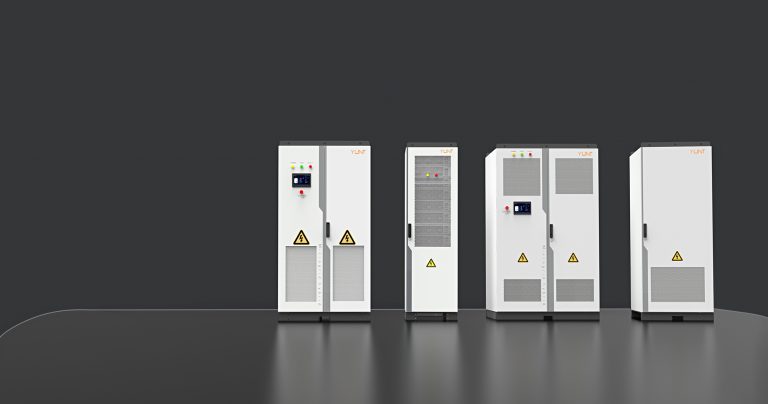
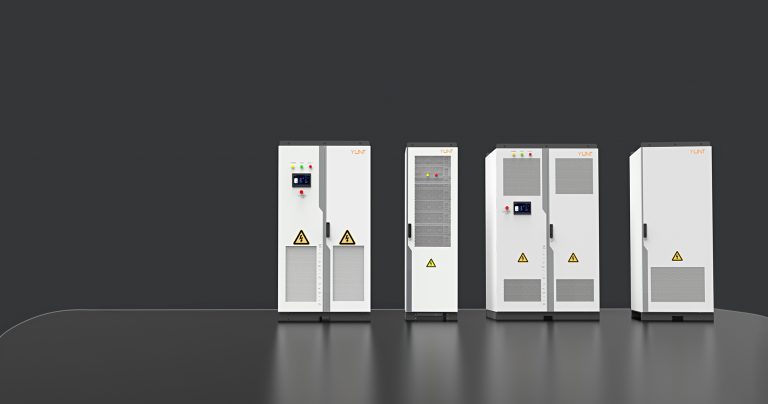
Wholesale procurement that follows the metrics above will avoid retrofits and secure better lifetime yield. YUNT’s product families emphasize configurable tracking parameters and logging that map to the evaluation metrics—so fleet managers can tune step-size, sampling interval, and damping remotely, reducing P&O chasing in variable climates. The result: predictable, quantifiable improvements in delivered energy and lower operational headaches. Trust outcomes backed by field data. YUNT.