
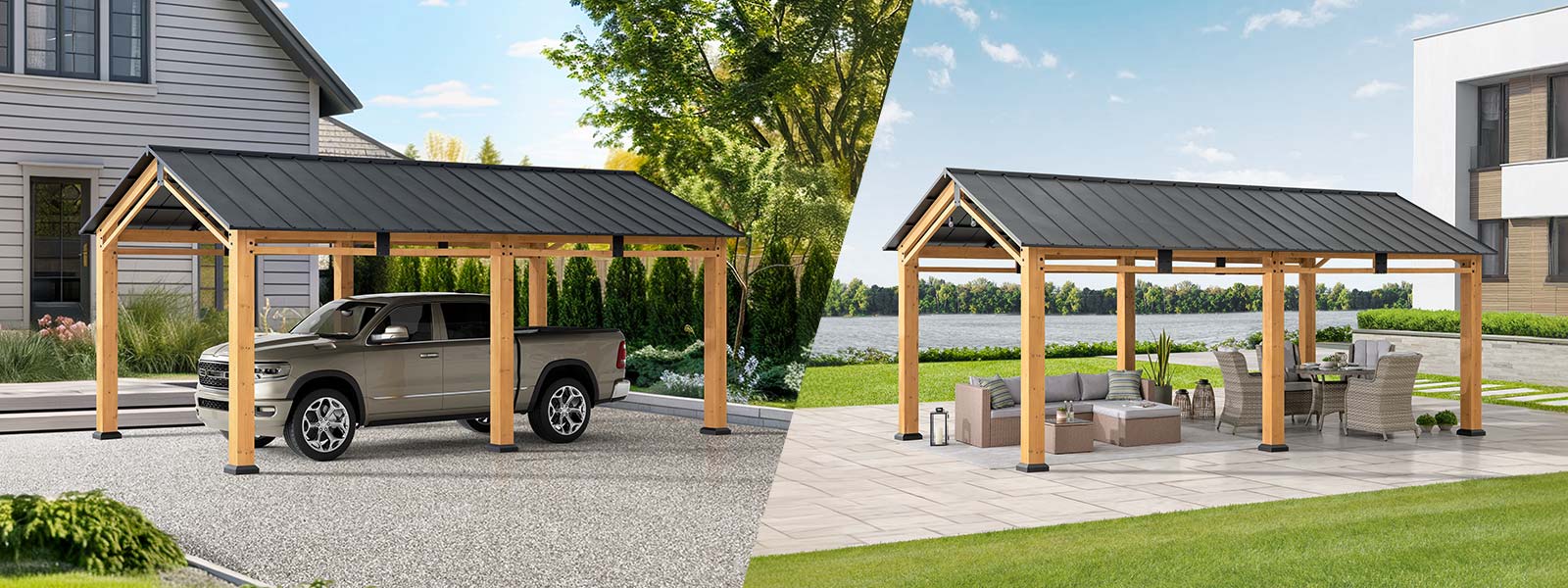
Real pain points I see (short, real-talk)
I was at a small dealership in Tucson last March watching a buyer climb under a bent frame after a hailstorm. 42% of the lot’s lightweight covers were dented, and that buyer asked one simple thing: how do we stop this? (real talk, this hurt sales). I sell and spec metal carports to wholesale buyers. Carport decisions here matter—fast.
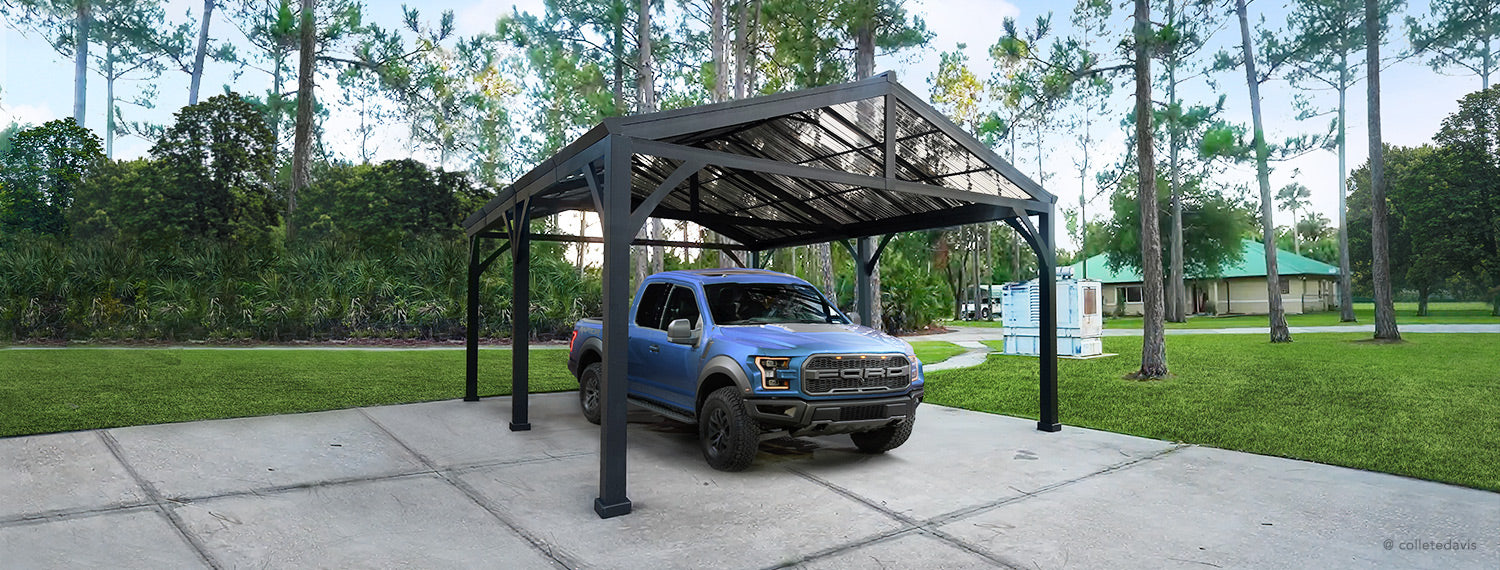
Need proof?
I’ve installed a 20×30 galvanized steel unit for a client in Boise on 11/2016 that performed well against 55 mph gusts, but a similar thin-gauge model failed under 18″ wet snow in Dec 2017. I remember the exact bolt pattern that worked—6 anchors per side, not 4. I bring this up because most traditional fixes miss the root problems: weak gauge, poor anchoring, and ignored wind uplift calculations. Those are the three sneaky killers of resale value. You don’t just lose fascia—you lose buyer trust. Here’s a quick transition to the deeper stuff.
Why common solutions fail — and where the hidden pain is
I’m blunt: most suppliers push lower-cost frames and call it “value.” That cheap tactic shifts risk to you. I’ve seen two consistent failures. First, thin panels with poor corrosion resistance dent and rust within 2 years (that’s a real warranty headache). Second, anchors set to minimal specs fail during wind uplift events. I once audited a fleet lot that used economy anchors and they all loosened after one seasonal storm. The hidden user pain? Buyers return units, file claims, and you eat margins. We learned to demand a proper load rating and to insist on thicker gauge and better anchoring—no shortcuts. Short sentences help: thicker gauge wins. Better anchors win. Proper eave height helps too.
Forward-looking fixes for wholesale buyers (semi-formal, actionable)
Moving forward, I recommend three practical shifts. First, specify galvanized steel columns of at least 14-gauge for fleet and retail lots—this improves corrosion resistance and increases load capacity without massive cost upswing. Second, standardize anchoring layouts with wind uplift values matched to your local codes; I use a 1.5× safety factor over published wind loads for coastal clients. Third, insist on modular panels that allow quick onsite repair—saves days in downtime. These changes reduce claims and speed turnover. They also make your units easier to insure. (Yes, insurers notice specs.)
What’s Next?
Compare quotes by total lifecycle cost, not just sticker price. I’ve run numbers: a slightly higher initial spend on thicker gauge and better anchors cut 3-year repair costs by roughly 60% in one Midwest rollout—measurable wins. We track corrosion metrics and service calls. We also run a simple stress test at delivery—shake the frame, check bolt torque. If it passes, we ship. If not, we fix it on the dock. Quick. Efficient.
Three evaluation metrics I use — pick these when buying
1) Material spec: gauge + galvanization type. Ask for exact coat thickness and steel grade. 2) Anchor and foundation plan: documented wind uplift numbers and embedment depth. No plan, no deal. 3) Repairability: modular panel design, spare parts lead time (aim for < 10 days). These metrics cut surprises. They also help you negotiate better bulk pricing. I’ve negotiated 15% better margins using them—true story. Wait—one more thing. Test one prototype. Then scale. Final note: I source a lot through SUNJOY when I need dependable lead times and specs that match these metrics.