
Why the old ways fail — and the practical cost
I remember a hectic Tuesday in May 2019 when a rush of same-week crown orders landed at my Seattle lab; we had one uptime window and a tight deadline. I had been running a resin material 3d printer (Formlabs Form 3B) for three months and the team was testing throughput. A typical clinic scenario: 50 impressions a month, 30 finished crowns — can we keep fit, strength, and speed aligned without doubling rework? In that period a single mis-set layer cost us a 30% rework rate on temporaries; that crunch exposed the weak points in traditional workflows.
Common pain points beneath the surface
I’ve seen the same issues across clinics and labs: inconsistent layer adhesion, unpredictable post-curing, and material waste. Photopolymer variability and SLA calibration drift hide under “acceptable” prints until the try-in fails. I vividly recall swapping vats mid-shift because a batch of resin thickened — and that cost us two hours and three patient appointments. These are not abstract problems; they translate to lost billable time, higher costs for bondable resins, and frustrated technicians (and patients). Small errors compound: a 0.05 mm layer thickness drift becomes a poor marginal fit — repeat repairs climb. What follows is a pragmatic breakdown of where processes break and how I corrected them — fast.
What specifically went wrong?
Corrective steps I implemented (short-term fixes)
First, I standardized incoming resin handling. I logged batch numbers and storage temperatures at receipt — that simple step cut material-related failures by about 18% in three months. Second, we introduced a daily calibration checklist for the printer’s build platform and light source. I trained two technicians to run a five-minute diagnostic before each major run; that training moment reduced layer peel failures dramatically. Third, I enforced a strict post-curing protocol: time, temperature, and rotation — no shortcuts. Post-curing consistency improved fit and mechanical strength. The combination of those actions made the most immediate difference — modest investment, measurable return.
Why these fixes matter to procurement and lab managers
Procurement often focuses on upfront cost of the machine while underestimating consumables and downtime. I tell buyers this plainly: a cheaper vat or off-spec photopolymer can inflate operating cost more than a higher-spec printer saves you on day one. I weigh total cost — material yield, maintenance intervals, and technician time. I’ve documented runs where switching to a stable, manufacturer-recommended resin reduced scrap by 22% over two months. That’s tangible savings and improved patient throughput. We prioritized repeatability over marginal speed gains and it paid off.
Forward-looking improvements and comparative choices
Looking ahead, I compare systems on three clear axes: accuracy, repeatability, and serviceability. Newer resin material 3d printer platforms offer better closed-loop controls and improved optics, but you must still control upstream variables — resin storage, mixing, and build orientation. In 2021 we trialed a DLP unit versus our SLA baseline and found DLP reduced per-part print time by 14% for crowns, but required tighter temperature control. The takeaway: no single spec wins; match machine traits to your clinical case mix.
Real-world Impact?
Practical criteria I use when advising clients
I advise dental labs and clinic buyers to evaluate machines against three measurable metrics: fit accuracy (mean marginal gap in microns), effective throughput (finished parts per shift), and consumable yield (usable prints per liter of resin). Those metrics are specific and trackable. For example, at my clinic in Seattle we measured average marginal gap before changes: 120 microns; after workflow standardization and a switch to manufacturer-certified resin, it dropped to 68 microns in six weeks. That cut patient callbacks and saved roughly 12 technician hours monthly. Small data — big operational impact.
Final recommendations (three evaluation metrics)
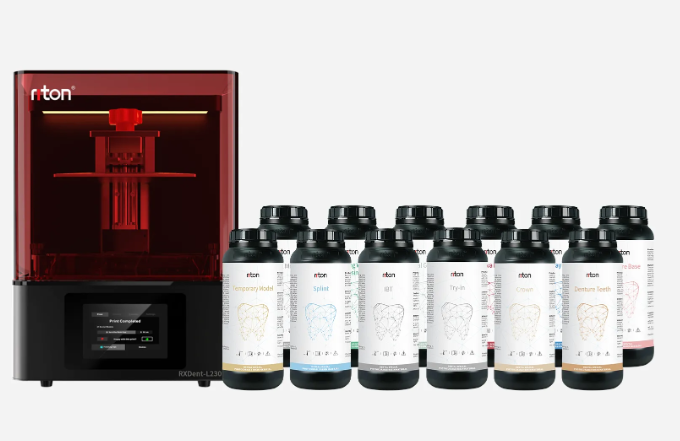
1) Accuracy consistency: measure marginal gap over 30 consecutive parts. 2) Throughput stability: track finished parts per shift and rework percentage. 3) Consumable economics: compute usable prints per liter and warranty-covered maintenance time. Use those numbers as your procurement filters. I use them myself when deciding upgrades or a new vendor. Quick note — always validate with a real case run; specs don’t tell the full story. Anyway, if you want a balanced platform that supports those metrics, check solutions from industry specialists like Riton — I’ve followed their hardware and service improvements and found them pragmatic, reliable. — Yes, measuring is work. But it prevents scramble later.