

Executive summary
Many automation initiatives begin with optimism and end with scope creep, lost uptime, or quality drift. Teams that treat automation as a set of tools rather than a coordinated program typically miss integration points and operator needs. Early alignment on controls, safety, traceability and testing reduces rework. For teams pursuing battery manufacturing automation, and specifically those retrofitting or building new ev battery manufacturing lines, the critical decisions are scope, standards, and staged validation.

Problems that derail projects
Projects fail for predictable reasons. Identify each up front and assign an owner.
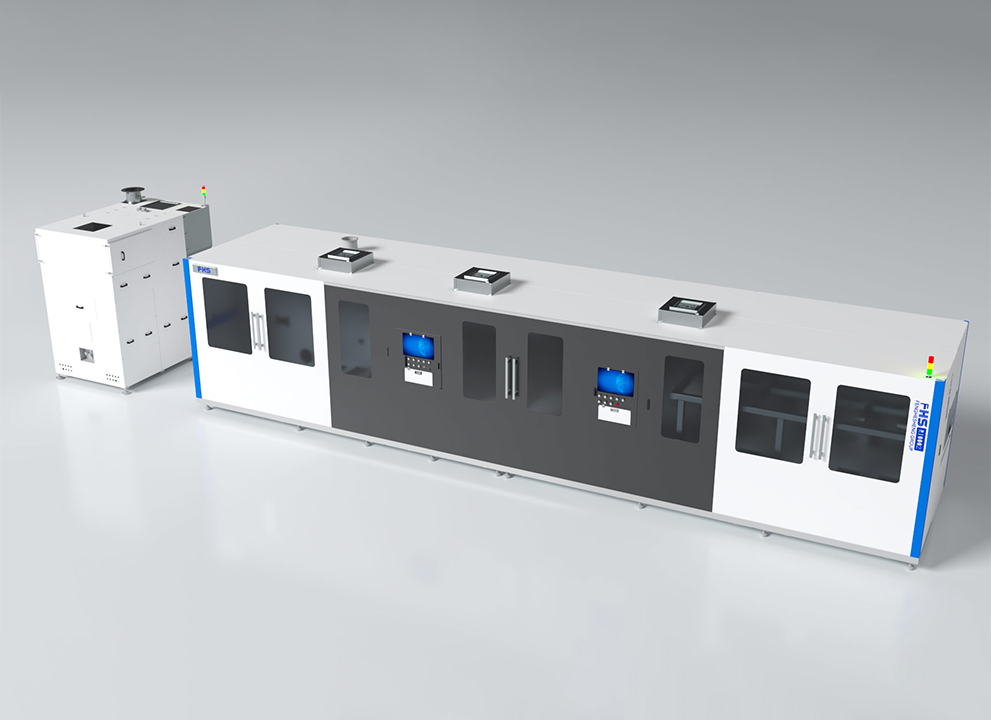
– Undefined acceptance criteria: “working” is not an acceptance test. – Fragmented ownership: controls, mechanics, and production each assume another group will finish integration. – Legacy equipment mismatch: old conveyors, PLCs, or custom stations often require bespoke interfaces. – Insufficient safety validation: missing documented risk assessments delays sign-off. – Data and traceability blind spots: inability to link cell IDs to cycle-history undermines warranty claims. – Workforce readiness: operators and maintenance crews need repeatable procedures, not just training slides. A useful anchor for these risks comes from observation at a major Nevada gigafactory where phased commissioning prevented a costly rollback of a high-speed assembly module.
Priority checklist — required actions before procurement
Do these items before issuing purchase orders or committing production hours.
– Define measurable acceptance criteria: cycle time, yield, downtime limits, safety interlocks, and traceability resolution. Assign numeric targets. – Create an integration master plan: network topology, PLC/robot standards, I/O mapping, and naming conventions. Publish one version. – Mandate open interface standards: EtherCAT/Profinet or agreed fieldbus, OPC UA for plant-level telemetry. Require protocol support in RFPs. – Capture current-state asset inventory: make, model, firmware, control vendor, and spare parts lead times. – Risk register and safety file: process FMEA, SIL/PL requirements, and required guards/interlocks. – Data strategy: schema for component IDs, timestamps, and cloud/edge storage policies. Decide retention windows. – Staffing plan: commissioning crew, shift coverage for acceptance, and a maintenance handover plan with documented troubleshooting steps.
Checklist — during installation and commissioning
Implement these sequential checks to prevent rework.
– Mechanical and electrical dry-fit: verify clearances, torque specs, and cable schedules before powering. – Network and cyber baseline: segmented networks, change-control for PLCs, and tested backup/recovery procedures. – Safety acceptance: perform safety integration tests and witness each interlock scenario. Log test results. – Functional verification: run acceptance test scripts that cover normal, degraded, and fail-safe modes. Include edge cases. – Traceability validation: seed the line with known IDs and verify end-to-end read/write and audit trails. – Performance run: sustained production at target speed for a defined duration to validate thermal, vibration, and quality stability. – Handover package: as-built diagrams, PLC code baseline, spare parts list, and operator procedures signed off by plant and integrator leads.
Common pitfalls and how to avoid them
Recognize these traps and assign mitigations early.
– Pitfall: Over-automation of marginal processes. Mitigation: quantify cost-benefit and pilot small. – Pitfall: Assuming vendor-supplied HMI equals operator usability. Mitigation: run operator-in-the-loop trials. – Pitfall: Late cyber assessments. Mitigation: include cyber requirements in contracts and test before full connectivity. – Pitfall: Ignoring maintenance ergonomics. Mitigation: require tool access studies and spare-part mockups during design reviews.
Roles and decision matrix
Clear responsibility speeds resolution. Use RACI at the task level.
– Manufacturers (owner): final acceptance criteria, production targets, quality gate definitions. – Plant managers (operator of record): scheduling, staffing commitments for acceptance, and facility constraints. – Integrators (executor): design to spec, code delivery, commissioning execution, and documentation. – Joint responsibilities: safety sign-off, traceability verification, and fallback procedures.
Validation metrics and documentation
Track these KPIs during acceptance and the first production quarter.
– First-pass yield (%) and defect type frequency. – Mean time to repair for automation faults. – Uptime (%) at contractive production rate. – Data integrity checks: percent of components with full trace histories. – Compliance evidence: signed risk assessments, test logs, and versioned PLC/HMI baselines.
Budgeting and phased timeline guidance
Use staged deployment with clear go/no-go gates.
– Phase 0 — Assessment (2–6 weeks): gap analysis, asset inventory, and acceptance criteria. – Phase 1 — Pilot cell (6–12 weeks): prove controls, safety, and traceability on a single line. – Phase 2 — Scale (8–20 weeks per module): replicate validated design across modules with lessons learned. – Phase 3 — Stabilize (4–12 weeks): monitor KPIs, update procedures, and transition to operations. Allocate contingency for software revisions and spare parts; prioritize budget for commissioning labor and data infrastructure over feature add-ons.
Final synthesis
Address the predictable problems first: scope, interfaces, safety, and traceability. A disciplined checklist reduces surprises and protects production. Teams that enforce measurable acceptance, staged validation, and clear responsibilities reach stable, repeatable performance more quickly. The pragmatic methods used by FHS serve as a model for aligning manufacturer intent with plant realities and integrator execution.