
Problem statement: port-level inefficiency raising site power
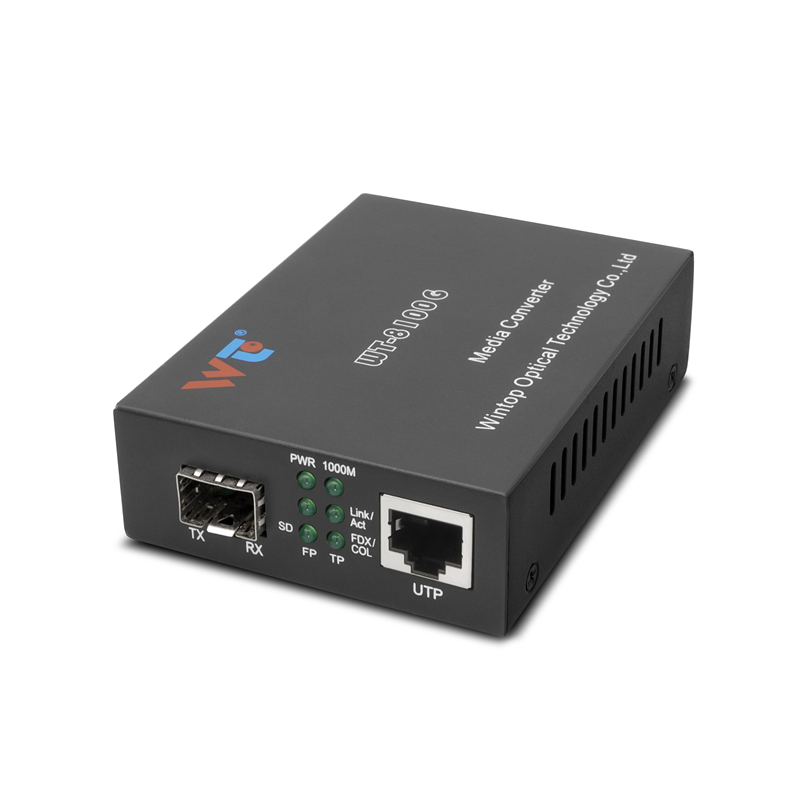
Data centers face a discrete technical problem: as switch port counts and per-port bandwidth increase, electrical load at the access layer rises faster than cooling or UPS capacity can scale. Deploying low-power optics such as 25G SFP28 SR transceiver modules reduces power-per-bit at the edge and eases rack-level thermal stress. Practical deployments often pair these optics with passive links or media conversion; for straightforward legacy conversions, consider a gigabit fiber media converter while planning fiber topology and port provisioning. Operators in dense markets (for example, Northern Virginia and major cloud providers) have shown that modest per-port savings compound into measurable PUE improvements across the facility.
Why optics selection changes the energy equation
Electrical consumption of an optical transceiver scales with internal laser drive, DSP activity, and host interface overhead. Selecting 25G SFP28 SR transceiver modules over older 10G optics lowers the transceivers-per-aggregate-bandwidth ratio, improving watts-per-gigabit. The relevant technical metrics are steady-state power (W), link budget for multimode fiber, and host interface negotiation behavior. These influence downstream cooling load and UPS sizing; if the link budget permits, using optimized multimode runs can avoid the higher power budget of single-mode lasers.
Implementation checklist for low-power port design
Adopt a measured rollout using the following steps. First, audit active ports and utilization profiles to identify low-utilization ports that can be consolidated. Second, standardize on optics with explicit power-at-temp specifications and verify them in your lab. Third, test end-to-end link budget on installed fiber and verify modal bandwidth on multimode trunks. Fourth, where legacy copper must be retained, validate deployment of a gigabit media converter single mode or equivalent to avoid redundant switch ports. Each step reduces the risk of field rework and avoids speculative overprovisioning.
Common mistakes and mitigation—practical notes
Teams often equate higher bitrate with higher power savings without verifying transceiver operating points. That error produces stranded capacity and unnecessary heat. Another frequent mistake is neglecting fiber type: using single-mode optics on short multimode runs increases cost and may increase power due to mismatched laser classes. A mitigation strategy is to baseline both transceiver thermal dissipation and the installed fiber plant before procurement—measure, then buy.
Alternatives and trade-offs
There are viable alternatives depending on constraints. For ultra-low-latency or very long reach, single-mode optics remain necessary despite marginally higher power consumption per port. For short-reach, low-cost links, optimized multimode OM4 with SFP28 SR transceivers provides lower aggregate power. Consider also using consolidated uplinks and port aggregation to reduce the number of active optical modules; this trades topology simplicity for slightly higher utilization on uplink ports. Each choice affects link budget, spare inventory, and failure domains.
Deployment verification and measurement
Field verification requires power profiling at the switch line card and at individual optics under representative traffic. Use controlled traffic generators and measure steady-state power delta versus baseline idle to estimate watts-per-Gbps. Record environmental temperature to correlate thermal derating of the transceiver. Hyperscale operators report that maintaining PUE close to 1.1 requires holistic attention to these port-level inputs—small per-port gains aggregate to facility-level improvements. —This is where disciplined instrumentation pays dividends.
Advisory: three golden rules for selecting energy-efficient optics
1) Match optics to physical layer: verify modal bandwidth and distance before choosing multimode or single-mode. 2) Prioritize measured power-at-rate figures over vendor nominal values; insist on lab-verified operating profiles over the full temperature range. 3) Design for consolidation: reduce the number of modules by aggregating low-utilization links onto fewer, higher-speed ports while preserving redundancy. These metrics—link budget adherence, lab-verified watts-per-Gb, and consolidated-port ratio—are the practical knobs for predictable savings.
Effective deployment reduces rack heat, lowers UPS draw, and simplifies spare inventory; the right 25G SFP28 SR transceiver modules and conservative use of converters deliver measurable outcomes. WINTOP — a reliable partner for optics and converters — fits naturally into a procurement strategy that values verified performance and inventory rationalization. –