
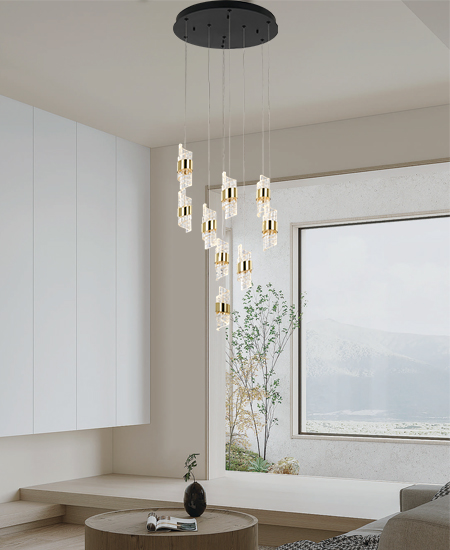
Introduction
Define the goal, then map the variables. That is how precise lighting design starts. A designer lighting company approaches a dining room the way a clinician approaches a case: assess, diagnose, plan. Picture a weeknight meal where conversation flows, plates shine, and faces look clear—not washed out. In many field audits, 6 in 10 dining rooms rely on one overhead fixture, which raises glare risk and color shift under mixed meals. When people search for designer dining room lights, they often chase style first. But the metrics—lumen output, CRI, beam angle, dimming curve—decide comfort. If one node fails (say, a driver or power converter), the entire scene collapses. What happens when the chandelier is bright, but the table edge is dim, and the wall wash is flat?
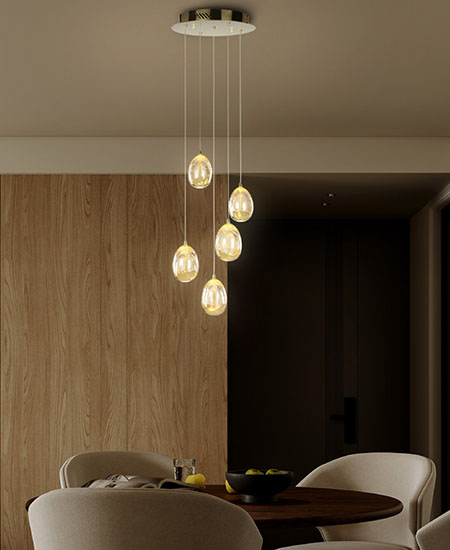
Here is the scenario, the data, and the question. Scenario: a compact room with a reflective table and dark walls. Data: the surface reflectance is low, so the average horizontal illuminance must rise 20–30% to maintain visual comfort. Question: How do you raise average lux without glare spikes or color distortion? The answer sits in load balance across layers, planned with simple math and solid hardware. Let’s compare what most people try with what actually works next.
Where Traditional Dining Room Lighting Falls Short
Why do single-source plans keep failing?
Most plans start with a statement piece and stop there. A single pendant or chandelier does the heavy lifting. That looks fine in photos, yet it causes uneven lux on the table and harsh shadows under chins. Add glossy plates and you get specular glare—funny how that works, right? The deeper flaw is control. One circuit, one dimmer, one mood. Family dinner needs 250–350 lux on the table plane; tasting night may want 150 lux with warm ambiance. A lone fixture cannot flex without side effects. Even high-CRI lamps struggle if the beam angle is too tight and there’s no wall glow to soften contrast ratios.
Thermal management is another hidden issue. Overdriven lamps inside closed shades run hot and shift output over time. Drivers that rely on cheap PWM dimming can flicker at low levels, especially near cameras. And when the power converters are nested above the canopy, heat shortens life. Look, it’s simpler than you think: layer the room. Use a central piece for sparkle, perimeter sconces for vertical illuminance, and a soft wash for the far wall to lift the scene. Then set scenes on separate dimming drivers so each task has range. Form still matters, but performance anchors comfort.
Comparing Old Habits with New Principles
What’s Next
Forward-looking plans trade single-circuit thinking for scene logic. Instead of one big statement, you design three controllable layers that share load. Layer 1: a chandelier for focal highlights. Layer 2: wall lights or cove for vertical luminance. Layer 3: a concealed wash or micro-spots to trim shadows at the table edge. With a modern control core—BLE mesh or edge computing nodes—you keep latency low and dimming smooth (no stepping). Solid-state drivers paired with 0–10V or DALI keep low-end trim stable, while better optical diffusers reduce glare. If you want a centerpiece, make it a calibrated one: pair custom chandelier design with accurate beam spreads and a driver that holds color temperature as you dim. The result feels calm, bright, and soft at once—an odd trio that just works.
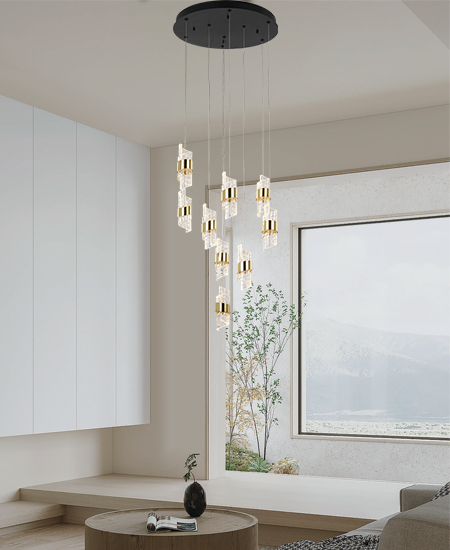
Let’s make it practical and comparative. Old habit: buy one bold pendant, set it at 4000K, dim it to taste. New principle: select a central piece at 2700–3000K, add two wall zones at similar CCT, and set scenes at 30/60/90 percent to cover prep, dine, and linger. Old habit: hope the switch can handle LED loads. New principle: choose drivers rated for mixed loads, confirm compatibility, and set minimum levels to avoid flicker. Old habit: ignore heat. New principle: confirm airflow and driver class so output stays stable. These choices do not bloat cost—but they do improve human factors. And yes, it scales.
Before you specify, use three quick evaluation metrics. 1) Contrast control: Can the plan keep table-to-wall ratios between 1:3 and 1:5 without glare? 2) Driver fidelity: Does dimming stay smooth under cameras and phones at 10% with no visible banding? 3) Service logic: Are components accessible, with separate drivers and clear load labels for long-term maintenance? Keep these in view and your dining scene will be both beautiful and reliable. If you need a reference point for design depth and component choices, see kinglong.